
Islam is a faith deeply rooted in divine guidance, revelation, and knowledge. One of the most important beliefs in Islam is that Allah sent guidance to humanity through holy books, revealed to chosen prophets across different times and communities. These scriptures were meant to guide people toward truth, morality, and the worship of one God, helping societies maintain justice, compassion, and spiritual awareness.
Understanding the Four Holy Books in Islam is essential for appreciating the continuity of divine messages throughout history and the foundation upon which Islamic belief stands. Learning about these books also shows how Islam connects with earlier revelations, highlighting the unity of God’s message across time.
Platforms like Islamic Mentors play a vital role in spreading authentic knowledge of these core concepts in a simple, accessible way, making it easier for students, reverts, and seekers of knowledge to learn Islam correctly.
What Are the Four Holy Books in Islam?
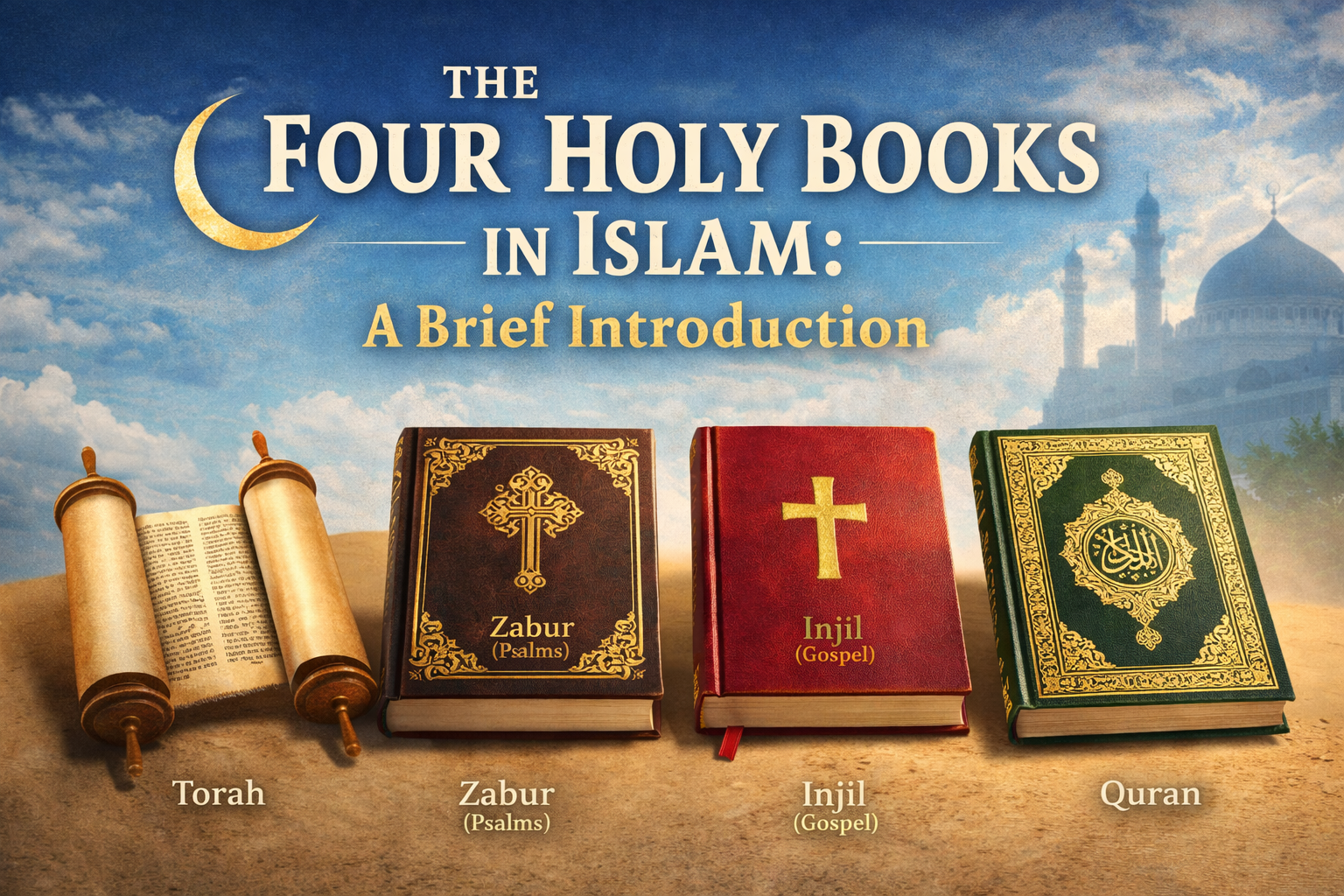
Muslims believe that Allah revealed four major holy books to different prophets. Each book was sent to guide a specific community at a specific time, carrying divine wisdom, moral laws, and instructions for worship. These books are:
- Tawrat (Torah) – revealed to Prophet Musa (Moses, عليه السلام)
- Zabur (Psalms) – revealed to Prophet Dawood (David, عليه السلام)
- Injeel (Gospel) – revealed to Prophet Isa (Jesus, عليه السلام)
- Qur’an – revealed to Prophet Muhammad ﷺ, the final and complete message for all humanity
While many people may recognize the names of these books, few truly understand their purpose, scope, and connection to one another. A deeper exploration helps clarify the continuity of divine guidance and the role of each scripture in Islamic belief.
Tawrat: Guidance to the Children of Israel
The Tawrat was revealed to Prophet Musa (Moses, عليه السلام) and is known as the Torah in the Judeo-Christian tradition. It contained laws, commandments, and guidance for the Israelites to live righteous lives.
Key features of the Tawrat:
- Emphasized worship of one God
- Provided rules for moral conduct and justice
- Served as a legal and ethical guide for society
Although the original Tawrat has been partially altered over time, its essence is preserved in Islam’s recognition of Moses as a major prophet. Muslims regard the Tawrat as part of Allah’s revelation and believe it points to future guidance, culminating in the Qur’an.
Zabur: Songs of Praise and Wisdom
The Zabur was revealed to Prophet Dawood (David, عليه السلام). It is often referred to as the Psalms, containing prayers, hymns, and spiritual wisdom. The Zabur encouraged believers to:
- Praise and worship Allah
- Practice gratitude and humility
- Follow moral and ethical guidance
The Zabur’s focus was more spiritual and devotional, teaching people how to connect with God through prayer, reflection, and ethical behavior.
Injeel: The Message of Jesus
The Injeel was revealed to Prophet Isa (Jesus, عليه السلام). It emphasized love, compassion, and guidance for righteous living. The Injeel guided the people of Isa’s time in:
- Recognizing the oneness of God
- Practicing justice and mercy
- Understanding accountability in the Hereafter
Although the original Injeel has been changed over centuries, Islam teaches that Prophet Isa was a true messenger, and the Qur’an confirms his message while preserving the continuity of divine guidance.
Qur’an: The Final and Complete Revelation
The Qur’an was revealed to Prophet Muhammad ﷺ and serves as the final and preserved guidance for all humanity. Unlike previous scriptures, the Qur’an:
- It is complete and unchanged since the Revelation
- Applies to all communities, times, and places
- Combines spiritual, moral, and legal guidance
- Confirms and corrects the messages of previous books
The Qur’an teaches the same core principles as the earlier books but provides clarity, authenticity, and universality. It guides humanity in every aspect of life, from personal morality to social justice.
A Shared Message Across Time
Although these books were revealed at different times and to different communities, their core message remained the same:
- Belief in One God – Every scripture emphasized monotheism and rejection of idolatry.
- Moral Responsibility – Each book instructed people to act ethically, treat others kindly, and follow divine laws.
- Justice and Compassion – Social justice, honesty, and compassion were central to all messages.
- Accountability in the Hereafter – Every prophet reminded people of life after death and the importance of righteous deeds.
Over time, some earlier scriptures were lost, altered, or restricted to specific communities. The Qur’an, however, was sent as the final and preserved book, ensuring that Allah’s complete guidance remained available to all generations.
Why Learning the Details Matters
Many misconceptions exist about the Four Holy Books:
- Some people wonder whether Muslims believe in previous scriptures
- Others are confused about how the Qur’an relates to earlier books
- Many do not understand the role of these books in Islamic belief today
A clear and authentic explanation helps strengthen faith, remove confusion, and provide a deeper appreciation of Allah’s guidance. For students, reverts, and those exploring Islam, understanding the historical context and spiritual significance of each book is essential.
Learning Resources for Authentic Knowledge
Platforms like Islamic Mentors make learning about Islam easier by providing:
- Simple and clear explanations of core concepts
- Structured courses covering history, theology, and morality
- Accessible content for learners of all levels
Studying authentic sources ensures that students and seekers develop a true understanding of Islam, free of misconceptions and incomplete information.
Final Thoughts
Learning about the Four Holy Books is not just about history — it is about understanding Allah’s guidance to humanity over time. Each book played a role in teaching people how to worship God, live morally, and create just societies. While the Qur’an remains the final and universal guide, studying earlier revelations helps deepen respect for the continuity of God’s message.
Curiosity about the Four Holy Books can lead to a lifelong journey of learning and spiritual growth. For those seeking structured and reliable Islamic knowledge, platforms like Islamic Mentors offer valuable resources to explore the faith in a clear, authentic, and engaging way.
For parents who want their children to build a strong connection with the Qur’an from an early age, enrolling in online Quran classes for kids can be a meaningful step. With qualified teachers and personalized guidance, these classes help children learn proper Tajweed, understanding, and recitation—all from the comfort of home. It’s a convenient and effective way to nurture Islamic knowledge in today’s digital world.
FAQs About the Four Holy Books
1. Do Muslims believe in previous holy books?
Yes, Muslims respect the Tawrat, Zabur, and Injeel as divine revelations sent by Allah, even though some parts have been lost or altered.
2. How is the Qur’an different from earlier books?
The Qur’an is complete, preserved, and meant for all humanity. It confirms previous messages while providing clarity and universal guidance.
3. Why study the Four Holy Books?
Studying these books helps understand the continuity of divine guidance, the unity of prophets’ messages, and the ethical foundations of Islam.
4. Can anyone access authentic learning resources?
Yes, platforms like Islamic Mentors provide structured, reliable, and easy-to-understand Islamic education for learners worldwide.
5. What is the main message of all holy books in Islam?
The main message is belief in one God, moral responsibility, compassion, justice, and accountability in the Hereafter.