
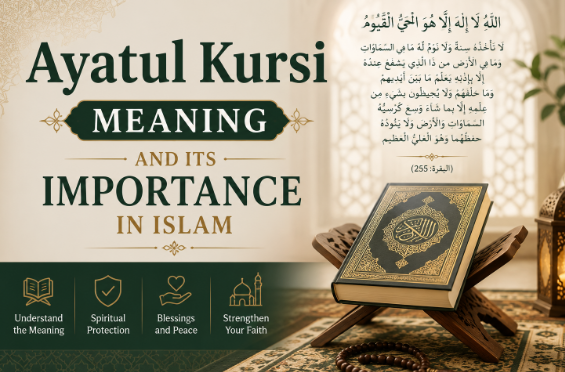
Right there at the heart of Surah Al-Baqarah, verse 255 stands out – Ayatul Kursi. Not just any line, it carries weight among those who turn to the Qur’an each day. From sunrise prayers to quiet nights, many repeat these words seeking calm. Its power lies in how clearly it shows Allah’s endless reach across skies and soil. Though brief, every phrase pulls attention toward divine awareness and rule. People feel grounded when they speak it, like an anchor in shifting winds. This single passage, placed so early in scripture, echoes through routines and rituals. Understanding grows with each slow reading under breath or silent thought. It does more than inform – it shapes moments, guards spaces, lifts hearts without noise. Few verses match its presence in Muslim life, steady and sure as dawn light.
One way to see it: Ayatul Kursi shows Allah’s singularity, endless presence, because nothing compares when it comes to control over everything alive. Kids raised Muslim learn these words early since they flow through daily prayer times, right after finishing Salah, also whispered at bedtime – protection slips in that way, so does grace.
This piece dives into a well-known Quranic passage, unpacking what it means, why it matters, then how lives are shaped by its presence. Because faith leans on reminders like these, the phrase Ayatul Kursi carries weight far beyond words alone. Where belief meets daily struggle, this verse steps in – not loudly, yet impossible to ignore. Its strength lies not in mystery but clarity: God watches, guards, remains near. Though spoken often, each repetition feels different – shifting with need, mood, silence after utterance. What stands out most? Not grand claims, just steady reassurance built line by line. People return to it when uncertain, tired, seeking grounding without fanfare. It does not shout. Yet echoes linger long past recitation ends.
Understanding Ayatul Kursi
Alive forever, He does not tire. That term refers to a seat, yet points beyond furniture. Power and knowing everything fill its meaning in Muslim belief. No moment escapes His grip. Rest never claims Him. Ownership of all skies and ground rests in His hands alone. Events unfold only when allowed.
Out here, it’s clear – what God knows has no edges. People? Their grasp falls short, every time. Only those allowed get near enough to speak on another’s behalf. That space between mercy and fairness? Hold tight by one rule: He says so.
Ayatul Kursi Holds Significance in Islamic Tradition
Right there near the heart of faith sits Ayatul Kursi, deep in meaning and weighty in presence. This verse stands tall among Qur’anic lines because it speaks clearly – Allah alone is God. The Prophet Muhammad did not hold back praise when urging believers to repeat these words daily. After each required prayer, his guidance pointed here, again and again.
The importance of Ayatul Kursi can be understood through its spiritual benefits:
Belief in God grows stronger because of it.
Seeing His strength helps notice what He knows. Awareness grows when power shows itself.
Shielding comes through its presence, keeping danger at a distance. Evil forces find little hold where it stands.
Peace flows into the heart, settling like evening light across still water. Stillness follows, quiet footsteps filling the spaces between breaths.
From the moment they speak it, a quiet strength rises. This line wraps around like an unseen cloak. Danger near or far finds no hold. Protection forms through each spoken word. A presence guards what eyes can see – and what they cannot.
Virtues Of Ayatul Kursi
Among Qur’anic verses, none holds higher regard than Ayatul Kursi – this truth appears clearly in trusted Hadith sources. It earns that rank through a well-known report calling it the supreme verse. Standing out isn’t subtle; its position is defined by weighty recognition passed down faithfully.
Some of the key virtues include:
Protection from Shaytan (Satan) and negative forces.
Only those who say it often, truly meaning each word, will find their way inside Paradise.
Increased blessings in daily life.
Strengthening of spiritual connection with Allah.
For these reasons, plenty of Muslims choose to say Ayatul Kursi following each prayer, also right before bedtime.
Spiritual and Practical Benefits
Peace comes quietly when those words are spoken. Watched over, one feels – never truly on their own. A verse does more than sit in scripture. Held closely, it heals minds and hearts alike.
Some practical benefits include:
Reducing fear and anxiety
Providing comfort during difficult times
Helping in focusing on faith during hardships
Strengthening trust in Allah’s plan
Starting a journey, stepping inside their house, or dealing with tough moments – some Muslims say this prayer then. They feel it draws safety and good things from God closer. Not every person does it the same way, yet the hope behind it runs deep.
Tafsir (Explanation) Summary
Out beyond every corner, Allah’s knowing stretches – no speck too tiny, no space too wide. Every motion slips through nothing unseen. Rest? Fatigue? Those belong to others, never Him. Sleep never touches His sight.
Over the skies and ground stretches His throne, a sign of unmatched power. Not bound by space or thought, He stands beyond what minds can grasp.
Protection and Everyday Use
Reciting Ayatul Kursi for safety comes naturally to many Muslims. This verse tends to be spoken aloud at key moments
Each time a required prayer finishes
Before sleeping at night
Every time someone steps into or out of the home
During travel for safety
Some say these words call gentle watchers close, holding danger back till daylight returns.
Conclusion
Peace finds its way into hearts that carry Ayatul Kursi through each day. Not merely lines in scripture, they breathe life into faith, standing like a shield against doubt. A rhythm forms when spoken often calm follows, woven by remembrance of divine control. This passage lifts the soul upward, anchoring it to something greater than fear. Protection isn’t asked for loudly, it arrives quietly through repetition and respect because meaning builds slowly.
Deepening faith often comes from moments like sitting quietly with Ayatul Kursi, letting its weight settle slowly. Because of this verse, trust in Allah’s shelter grows stronger when life feels uncertain. Not everyone notices at first, yet it holds a quiet power for those willing to listen closely. Its strength shows up most through daily choices shaped by reflection. When thought becomes practice, guidance turns into something lived rather than spoken. To explore more authentic Islamic supplications, My Islamic Dua offers a helpful collection for daily spiritual connection.
FAQs
1. Understanding Ayatul Kursi?
Ayatul Kursi appears right at verse 255 in Surah Al-Baqarah, tucked inside the Qur’an. This line paints a picture of God’s unmatched strength, endless awareness, His rule stretching far beyond what we see. With every word it builds a sense of presence – calm yet immense. Not loud, but firm. It speaks without shouting. While many verses teach, this one stands apart just by being there. Its depth stays steady, never fading. You feel it more than understand it.
2. Ayatul Kursi Holds Significance in Islamic Belief?
Some see it as a standout line in the Qur’an – offering calm, safety, along with inner resilience.
3. Best Times to Recite Ayatul Kursi?
Start each round of prayer by saying it right after. Try this before you close your eyes at night. Slip it in when moving between places. Say it when things feel heavy or unclear.
4. Benefits of Reciting Ayatul Kursi?
Peace of mind comes quietly, safety wraps around like a shield. Faith grows stronger through unseen support. Comfort finds its way into the spirit, gently holding what was once restless.
5. Does Ayatul Kursi guard against harm?
True, repeating it often helps guard against evil forces, based on Muslim beliefs. Regular saying builds a shield, guided by faith’s rules.