
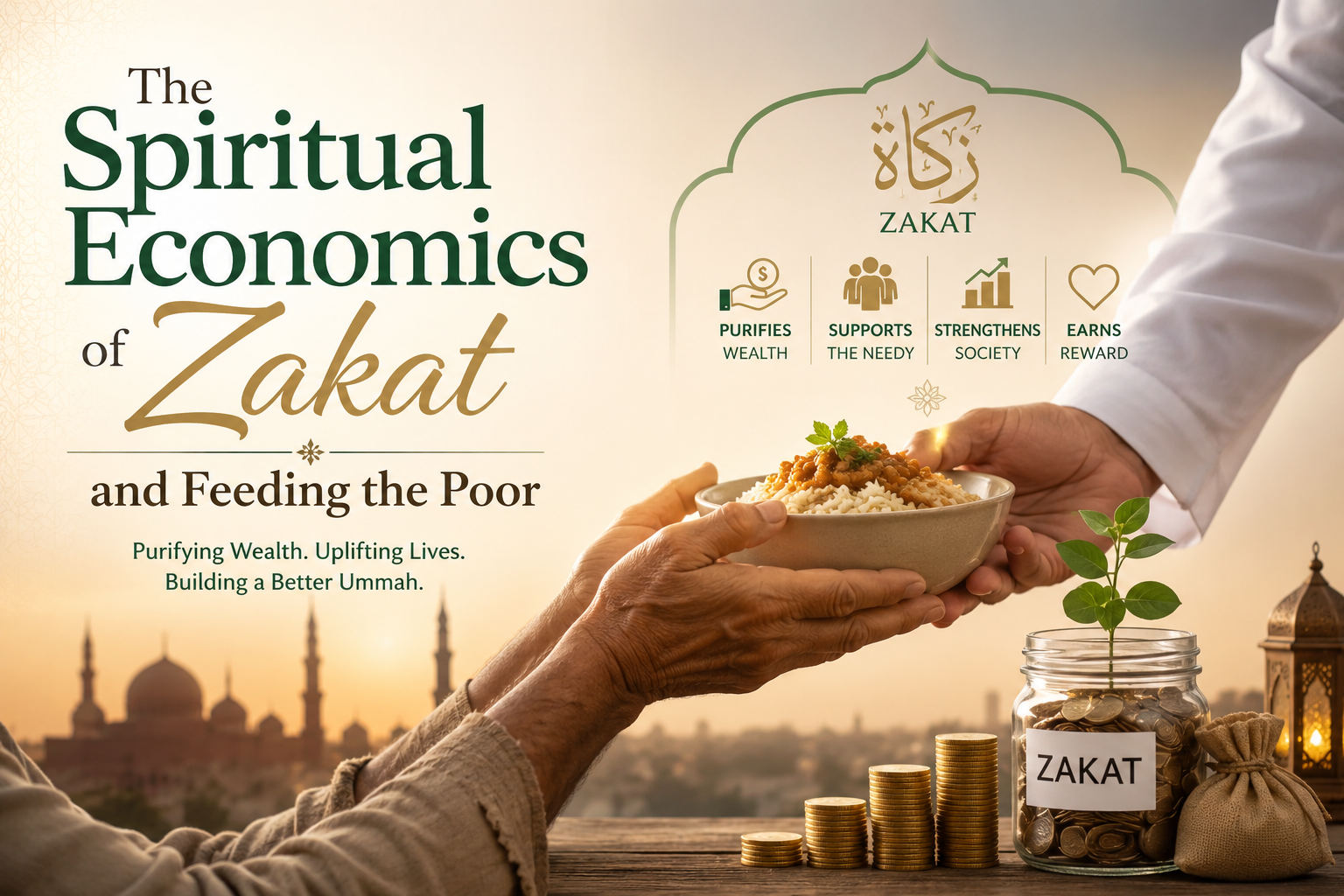
How Feeding a Child Purifies Our Wealth
In modern economics, wealth is viewed through a lens of subtraction and addition: when you give money away, you have less of it. However, the Islamic economic framework operates on a completely different, spiritual principle. In Islam, giving charity (Sadaqah) and fulfilling the obligatory dues (Zakat) is a process of purification and expansion.
The word Zakat itself literally means “to purify,” “to grow,” and “to increase”. When we give, we are not losing wealth; we are weeding out greed from our hearts, purifying what remains, and inviting Barakah (divine blessing) into our provisions. Zakat is recognized as the third pillar of Islam and is a compulsory act of worship meant to support the less fortunate.
Among all the ways we can distribute our Zakat and Sadaqah, one act holds a particularly lofty status in the Quran and Sunnah: feeding the poor, especially vulnerable children who are seeking an education.
1. The Quranic Call: Feeding as a Pathway to Paradise
Throughout the Holy Quran, Allah consistently links true righteousness with the simple, compassionate act of providing food to those who cannot afford it.
In Surah Al-Insan, Allah describes the dwellers of Paradise:”And they give food in spite of love for it to the needy, the orphan, and the captive, [saying], ‘We feed you only for the countenance of Allah. We wish not from you reward or gratitude.'” (Surah Al-Insan 76:8-9)
Notice that the Quran highlights that they give food “in spite of love for it.” True charity requires us to give from the things we value, transcending our natural desire to hoard resources. Feeding a hungry child is a direct, tangible way to show Allah that our love for His creation is greater than our attachment to our bank accounts.
2. Breaking the Cycle of Poverty Through Child Nutrition
When Zakat and Sadaqah are used to feed children in schools, the impact goes beyond relieving immediate hunger—it changes their future.
- Fuel for Learning: A child who is hungry cannot focus in class, retain information, or stay in school. By providing daily school meals, you ensure they have the physical energy and mental focus required to learn, memorize the Quran, and build skills.
- Support for Families: For parents living in refugee camps or extreme poverty, knowing their child will receive a hot, nutritious meal at school is a massive relief. It encourages them to keep their children in education rather than pulling them out to work, breaking the multi-generational cycle of poverty.
3. The Mathematics of Barakah: Keeping Your Finances Pure
Understanding how to calculate and distribute your assets is essential to protecting your wealth. Just as a garden must be pruned to grow healthy, our assets must be calculated and cleansed of the portion that belongs to the poor.
- Precise Auditing: Zakat is not a voluntary tip; it is a calculated right of 2.5% of net wealth. Using tools like a modern Zakat Calculator ensures you are evaluating your savings, gold, and investments with complete accuracy.
- Nisab and Thresholds: The Nisab threshold is determined by the market value of either 87.48 grams of gold or 612.36 grams of silver. Wealth must be held above this threshold for one full lunar year before Zakat becomes due.
- Prioritizing Obligations: Before inheritance or charity is distributed, Islamic law requires the settlement of all outstanding debts and funeral expenses.
- Integrating Charity: Spiritual habits grow through consistency. Keeping track of your giving goals using tools like a Daily Islamic Habit Tracker keeps you focused on consistent acts of goodness.
4. Reaching Out with Supplications (Du’as) for Barakah
In addition to physical giving, the Quran teaches us that our charity should be accompanied by sincere supplications asking Allah to accept our efforts and bless our provisions.
- The Power of Du’a: Reciting standard prayers of guidance and abundance keeps our intentions pure. Reciting these with perfect Tajweed is an essential etiquette for reading the Holy Quran and helps achieve reverence.
- Rabbana Supplications: The Quran contains 40 beautiful Rabbana Duas for sustenance and spiritual protection, which remind us that all provision (Rizq) comes from Allah alone.
Conclusion: Securing a Legacy of Mercy
The wealth we leave behind is not what we keep in our bank accounts; it is the charity we send ahead of us. When you calculate your Zakat accurately and direct it toward feeding hungry children, you are investing in a spiritual currency that never devalues. You are filling a child’s stomach, enabling their education, and purifying your own wealth—creating a legacy of mercy that will continue to yield blessings in this life and the next.
About the Author:
Quran In Depth, a global online academy that offers specialized Quran, Arabic, and Islamic studies classes. Through native Al-Azhar certified tutors and interactive tools like Tajweed testers, custom quizzes, and an Ayah Audio Looper, Quran In Depth helps students build a meaningful relationship with the Book of Allah.