
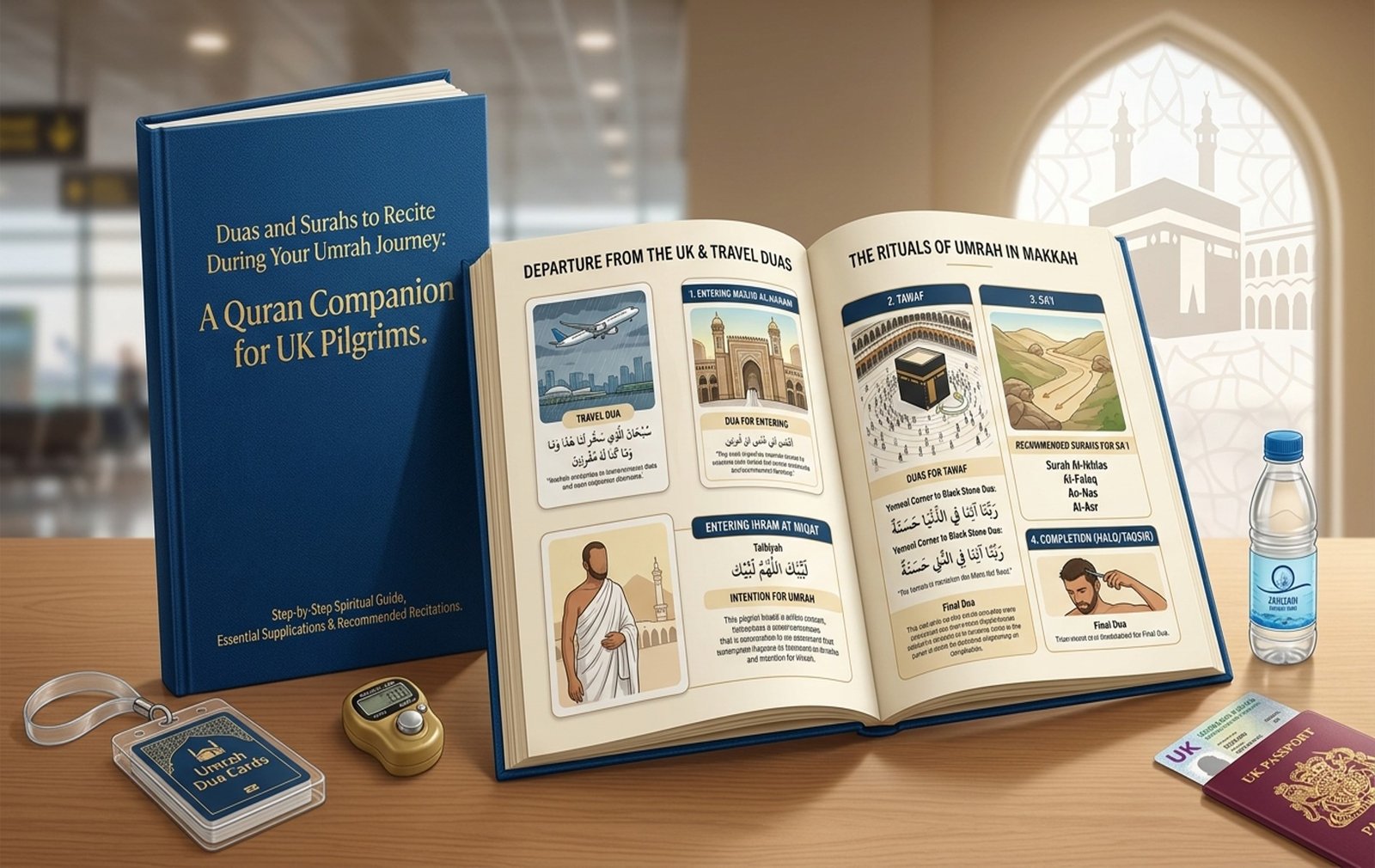
Duas and Surahs to Recite During Your Umrah Journey: A Quran Companion for UK Pilgrims
Umrah is one of the most cherished journeys in a Muslim’s life. From the moment you leave home to the moment you stand before the Kaaba, every step is an act of worship. Yet many pilgrims focus so much on flights, hotels and visas that they arrive in Makkah unsure of what to actually recite. The good news is that Umrah has no long list of compulsory memorised prayers. What matters far more is sincerity, presence of heart, and reciting the words of Allah with understanding and correct pronunciation.
This guide walks you through the key duas and surahs that bring the Umrah journey to life, along with simple Tajweed reminders so your recitation is clear, accurate and full of meaning. It is written with UK pilgrims in mind, including those still weighing up cheap Umrah packages and getting the practical side of the trip in order alongside their spiritual preparation.
What should you recite during Umrah?
During Umrah you mainly recite the Talbiyah after entering the state of Ihram, personal duas throughout Tawaf and Sa’i, and short surahs during your prayers. There is no fixed script you must follow word for word. Umrah is a deeply personal conversation with Allah, so you are encouraged to supplicate in your own words too, in any language you feel closest to.
That said, learning a handful of authentic duas beforehand helps you feel settled and spiritually connected rather than rushed. Let us go through them in the order you will need them.
The Talbiyah: the call that begins your Umrah
Once you enter Ihram and make your intention, you begin reciting the Talbiyah:
“Labbayk Allahumma labbayk, labbayka la sharika laka labbayk. Innal-hamda wan-ni’mata laka wal-mulk, la sharika lak.”
This means: “Here I am, O Allah, here I am. Here I am, You have no partner, here I am. Surely all praise, grace and dominion belong to You, and You have no partner.”
Men recite the Talbiyah aloud, while women say it quietly. Keep repeating it throughout your journey to Makkah. It is a powerful reminder that you have answered Allah’s call and left everything behind for His sake.
Tajweed tip: Pay attention to the elongation (madd) in “Labbayk” and give the letter ha in “al-hamd” its proper heavy sound from the chest. Reciting slowly and correctly is far better than rushing through the words.
Duas during Tawaf
As you circle the Kaaba seven times, there is no single obligatory dua for each round. You are free to make heartfelt supplication, recite Quran, or send blessings upon the Prophet ﷺ. Many pilgrims like to ask for forgiveness, guidance, good health and the wellbeing of their families.
Between the Yemeni Corner and the Black Stone, however, the Prophet ﷺ is reported to have recited this beautiful verse from Surah Al-Baqarah:
“Rabbana atina fid-dunya hasanatan wa fil-akhirati hasanatan wa qina ‘adhaban-nar.”
“Our Lord, give us good in this world and good in the Hereafter, and protect us from the punishment of the Fire.” (Quran 2:201)
This single verse gathers the best of both worlds into one short request, which is why it is so beloved by pilgrims.
Duas during Sa’i between Safa and Marwah
When you climb Safa to begin the Sa’i, it is recommended to recite:
“Innas-safa wal-marwata min sha’a’irillah.”
“Indeed, Safa and Marwah are among the symbols of Allah.” (Quran 2:158)
As you face the Kaaba on Safa and Marwah, you may raise your hands and make dua, repeating your supplications three times as the Prophet ﷺ did. Again, there is freedom here. Walk with the intention of Hajar’s trust in Allah as she searched for water for her son, and let your own worries pour out in prayer.
Short surahs every pilgrim should know
Whether you are praying the two units after Tawaf or your daily prayers in the Haram, knowing a few short surahs well will serve you throughout the trip. The following are especially useful:
- Surah Al-Fatiha — recited in every unit of prayer, so fluency here is essential.
- Surah Al-Ikhlas — commonly recited after Tawaf and known as equal to a third of the Quran in reward.
- Surah Al-Kafirun — often paired with Al-Ikhlas in the Sunnah prayers.
- Surah Al-Falaq and Surah An-Nas — the two surahs of seeking refuge, wonderful for protection during travel.
Reciting these with proper Tajweed transforms them from words on the tongue into worship from the heart. If your pronunciation of the Arabic letters is shaky, it is well worth brushing up before you travel. A few structured online Quran lessons focusing on the makharij (points of articulation) can make a noticeable difference to how confidently you recite in front of the Kaaba.
Why Tajweed matters more than memorising many duas
It is tempting to arrive with a long list of memorised supplications, but quality always beats quantity. Reciting even a single verse with correct pronunciation, understanding its meaning and feeling its weight is far more valuable than rushing through a dozen duas mechanically.
Tajweed protects the meaning of the Quran. A small slip in a letter or vowel can change a word entirely. When you give each letter its right and each word its due, your recitation honours the words as they were revealed and preserved since the time of the Prophet ﷺ. This is why taking time to learn even the basics of Tajweed before Umrah is such a worthwhile investment. Your recitation at the holiest sites on earth deserves your best effort.
Preparing practically as well as spiritually
Spiritual readiness and practical readiness go hand in hand. A calm, well-organised journey leaves you free to focus on your ibadah rather than worrying about logistics. Before you travel, it helps to:
- Learn your core duas and surahs early, ideally weeks in advance, so they settle in your memory.
- Revise your Tajweed so your recitation is clear and confident.
- Understand each rite of Umrah in order, so you are never confused about what to recite and when.
- Sort your travel arrangements well ahead of time, so the practical side is one less worry.
For pilgrims travelling from Britain, the logistics of flights from UK airports, visas, and hotels near the Haram can take considerable effort to arrange, especially during busy winter periods when December Umrah Packages from UK tend to book up well in advance. Many families prefer to let a trusted, ATOL-protected agency handle it so that pilgrims can concentrate on their worship instead of paperwork. Whichever route you choose, sorting the practical side early frees your heart and mind for what really matters once you reach Makkah.
Duas for the return home
When your Umrah is complete and you begin your journey back, it is Sunnah to remember Allah in gratitude. The Prophet ﷺ taught duas for travel that pilgrims can recite, thanking Allah for the blessing of visiting His House and asking Him to accept the Umrah. A commonly recited return supplication includes the words:
“Ayibuna, ta’ibuna, ‘abiduna, li-rabbina hamidun.”
“We return, repentant, worshipping and praising our Lord.”
Carry the spirit of your Umrah home with you. The real sign of an accepted journey is a changed heart: more consistent prayer, softer character, and a stronger bond with the Quran.
Frequently asked questions
Do I have to memorise all these duas before Umrah?
No. None of these supplications, apart from what is needed within your obligatory prayers, is compulsory to memorise. Learning them simply enriches the experience. You may make dua in your own words and language at any point.
Can I read duas from my phone or a booklet during Umrah?
Yes, many pilgrims carry a small dua book or use a phone app, especially during Tawaf and Sa’i. There is nothing wrong with reciting from a written source if you have not memorised the words.
How can I improve my Quran recitation before travelling?
Focus on the short surahs you will use most, and work on your Tajweed with a qualified teacher. Even a few weeks of consistent online Quran classes can noticeably improve your confidence and accuracy before you set off.
Is there a special dua for the first sight of the Kaaba?
There is no single authenticated dua fixed for that moment, but it is a highly recommended time for supplication. Pilgrims often raise their hands and make heartfelt personal dua, as it is a moment when prayers are hoped to be accepted.
Umrah is a gift, an invitation to stand at the House of Allah and pour out your heart. The duas and surahs above are your companions for the journey, but the true essence lies in sincerity, presence and reciting the words of Allah with care. Learn them well, recite them with proper Tajweed, and prepare both your soul and your logistics in good time.
May Allah accept the Umrah of all who make the journey, and may He allow every pilgrim to return with a lighter heart and a stronger connection to His Book. Ameen.