
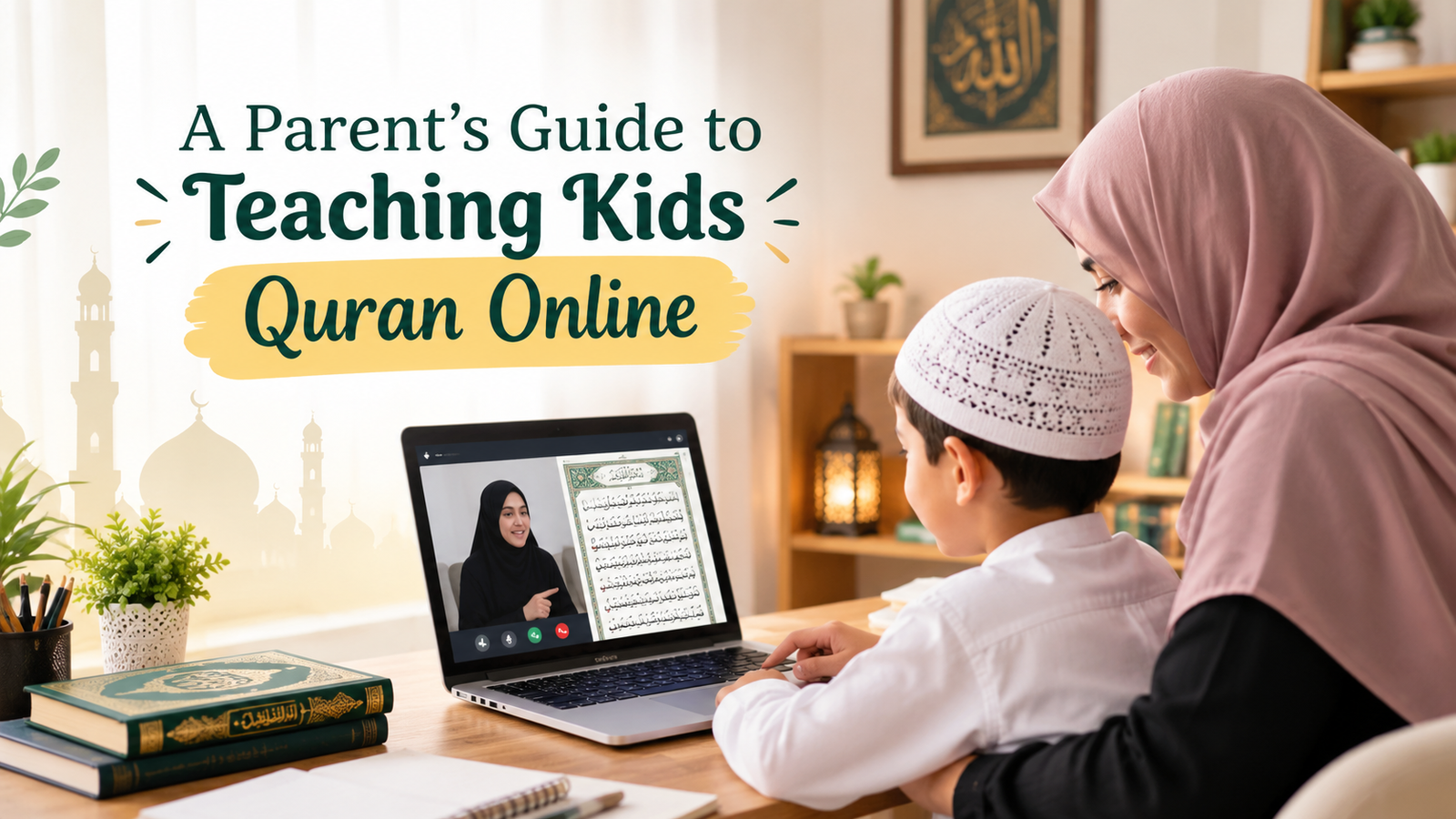
Teaching a child to read the Quran is a journey that takes patience, regular practice, and the right guidance. For many parents, online learning offers a practical way to introduce Quran education at home, especially when local classes are difficult to attend or family schedules are busy. However, parents may wonder where to begin, how to help their children pronounce Arabic letters correctly, and how to keep lessons engaging without putting too much pressure on them.
The key to understanding how to teach kids Quran online is to build skills gradually. Children need a strong foundation in Arabic letters, opportunities to practise what they learn, and supportive feedback from someone who understands their level. With a suitable learning approach and consistent encouragement at home, online Quran lessons can become a meaningful part of a child’s routine.
1. Start with the Basics of Quran Reading
Before children begin reading complete Quranic verses, they need to recognise Arabic letters and understand how their sounds change. Moving too quickly into longer passages can leave beginners confused, particularly if they are unfamiliar with the Arabic alphabet.
A step-by-step approach gives children time to understand each skill before moving forward.
Learn Arabic Letters and Their Sounds
Begin with individual Arabic letters, their shapes, and their correct pronunciation. Some letters may look or sound similar to beginners, so children benefit from hearing each sound clearly and practising it repeatedly.
Parents can support early learning by encouraging children to:
- Recognise Arabic letters individually before practising connected letters.
- Listen carefully to each letter’s sound and repeat it aloud.
- Learn the basic Harakat: Fatha, Kasra, and Damma, which change how letters are pronounced.
- Practise reading short combinations of letters as their recognition improves.
- Review previously learned letters instead of introducing too many new ones at once.
Short practice sessions are often more manageable for young learners than long periods of repetition. If a child struggles with a particular sound, revisit it calmly rather than treating the mistake as a failure.
Use Noorani Qaida to Build Reading Skills
Noorani Qaida is a commonly used beginner’s resource for learning the foundations of Quran reading. It introduces learners to Arabic letters, vowel sounds, letter combinations, and other essential reading rules in a structured sequence.
As children progress, they can practise connected Arabic letters and learn concepts such as Sukoon, Tashdeed, and Madd. These skills prepare them to read Quranic words more confidently. The goal is not to finish a book as quickly as possible, but to understand the rules and apply them correctly.
A parent looking for a structured starting point can explore a Noorani Qaida course for children and beginners to understand how guided lessons can support early reading skills.
2. Teach Correct Pronunciation and Basic Tajweed
Recognising Arabic letters is only one part of learning to read the Quran. Children also need to learn how to pronounce letters accurately and apply basic Tajweed rules as their reading develops.
Tajweed helps readers recite the Quran according to established pronunciation and recitation rules. One important part of this learning is Makharij al-Huruf, which refers to the articulation points from which Arabic letters are produced. Some sounds may be unfamiliar to children who speak English or another language at home.
How Can Children Improve Their Quran Pronunciation?
Children generally need to hear correct pronunciation, practise it, and receive clear feedback. Simply watching a video or repeating a sound without knowing whether it is correct may allow mistakes to become habits.
Try these practical methods:
- Listen before repeating: Let your child hear a letter, word, or short passage pronounced correctly before attempting it.
- Practise one difficulty at a time: If two letters sound similar, focus on distinguishing those sounds before moving to a longer exercise.
- Use guided correction: A knowledgeable Quran teacher can identify pronunciation errors and demonstrate how to correct them.
- Revise familiar examples: Repeating previously learned words helps children apply pronunciation rules more consistently.
- Build accuracy before speed: Encourage careful reading rather than rushing through a lesson or trying to match an advanced reader’s pace.
Children do not need to master every Tajweed rule immediately. Their learning should match their age, reading ability, and previous experience. As their foundations become stronger, they can gradually develop more accurate Quran recitation and greater confidence when reading aloud.
3. Choose an Online Quran Learning Approach That Fits Your Child
Online learning can make Quran education more accessible, but the quality of the learning experience depends on how lessons are taught. Parents should look beyond convenience and consider whether the approach gives their child enough practice, feedback, and support.
Look for Individual Attention and Qualified Teachers
Children learn at different speeds. One child may recognise Arabic letters quickly but struggle with pronunciation, while another may need more time to understand vowel sounds. A teaching approach that recognises these differences can help children work on the skills they actually need.
When evaluating an online Quran teacher for kids, consider whether the teacher:
- Has suitable Quranic knowledge and teaching experience.
- Can explain unfamiliar sounds and reading rules in a child-friendly way.
- Listens to the child’s recitation and corrects mistakes clearly.
- Adjusts lessons according to the child’s age, ability, and learning progress.
- Encourages questions and gives the child time to practise independently.
One-to-one Quran classes for kids can be useful because the teacher can focus on an individual learner instead of dividing attention among several students. Parents should also feel comfortable asking how lessons are structured and how progress is communicated.
Consider Flexibility and Progress Feedback
A practical schedule matters, especially for families balancing school, homework, family responsibilities, and other activities. Look for a lesson routine that fits your child’s day without making Quran learning feel like another source of stress.
Before choosing a programme, ask a few straightforward questions:
- What will my child learn during the first few lessons?
- How does the teacher identify and address learning difficulties?
- Will my child receive regular revision and pronunciation practice?
- How will I know which skills need more work?
- What happens if my child needs additional time to understand a lesson?
These questions help parents compare learning options based on teaching quality rather than promises alone. You can review the structure of online Quran classes for kids when considering how live instruction and individual guidance may fit your child’s needs.
The best option is one that supports steady learning, communicates clearly with parents, and gives children room to improve without unnecessary pressure.
4. Build a Consistent Quran Learning Routine at Home
A child does not need to spend hours practising every day to make progress. What matters is having a realistic routine that reinforces what they learn during lessons. Even a short period of focused revision can help children remember letters, sounds, and reading rules.
How Can Parents Help Children Practise Quran at Home?
Start by choosing a regular time when your child is reasonably alert and less likely to be interrupted. For some families, this may be after school and a short break; for others, an earlier or later time may work better.
A helpful home routine can include:
- Review the previous lesson: Spend a few minutes revisiting letters, words, or rules already covered with the teacher.
- Practise the assigned exercise: Let your child repeat the specific reading task recommended for their current level.
- Keep the learning space simple: Choose a quiet place with a stable internet connection and the materials needed for the lesson.
- Encourage active participation: Ask your child to read aloud rather than only listening to someone else recite.
- Communicate with the teacher: Share recurring difficulties or changes in your child’s schedule so the learning plan can be adjusted when needed.
Parents do not need to be Quran teachers themselves to provide meaningful support. Your role can be to help maintain the routine, listen when appropriate, and encourage your child to ask questions during lessons.
Avoid turning every practice session into a test. If your child becomes tired or frustrated, a short break may be more productive than continued repetition. A consistent, supportive environment helps Quran learning at home become a familiar habit rather than a daily struggle.
5. Track Progress and Keep Children Motivated
Progress in Quran learning is not measured only by how many pages or lessons a child completes. A child who reads fewer lines accurately may be developing stronger foundations than one who moves ahead while repeating the same mistakes.
Parents can look for several signs of progress:
- Letter recognition: Can the child recognise previously learned Arabic letters without frequent reminders?
- Pronunciation: Are familiar sounds becoming clearer and more consistent?
- Reading accuracy: Can the child apply learned vowel sounds and reading rules to new examples?
- Independence: Does the child need fewer prompts when practising familiar material?
- Confidence: Is the child becoming more comfortable reading aloud and asking for help?
These observations can help you discuss learning progress with the teacher and identify areas that need revision. If improvement seems slow, consider whether the child needs more practice, a different explanation, or additional time with a difficult concept.
Motivation also matters. Recognise effort, patience, and improvement rather than praising speed alone. Small milestones, such as mastering a difficult letter or reading a familiar exercise correctly, can make children feel that their work is worthwhile.
Some days will be easier than others, and occasional setbacks are normal. Keep expectations realistic, celebrate genuine progress, and allow the teacher to help adjust the learning approach when necessary.
Conclusion
Learning to read the Quran online works best when children receive clear instruction, regular opportunities to practise, and encouragement from their families. Start with Arabic letters and basic reading skills, introduce pronunciation and Tajweed gradually, and choose a learning approach that responds to your child’s individual needs.
Parents do not have to manage every part of the teaching process alone. A suitable teacher can guide reading development and correct mistakes, while a supportive home routine reinforces each lesson. With patience and consistency, children can build the skills and confidence they need to continue their Quran learning journey.