
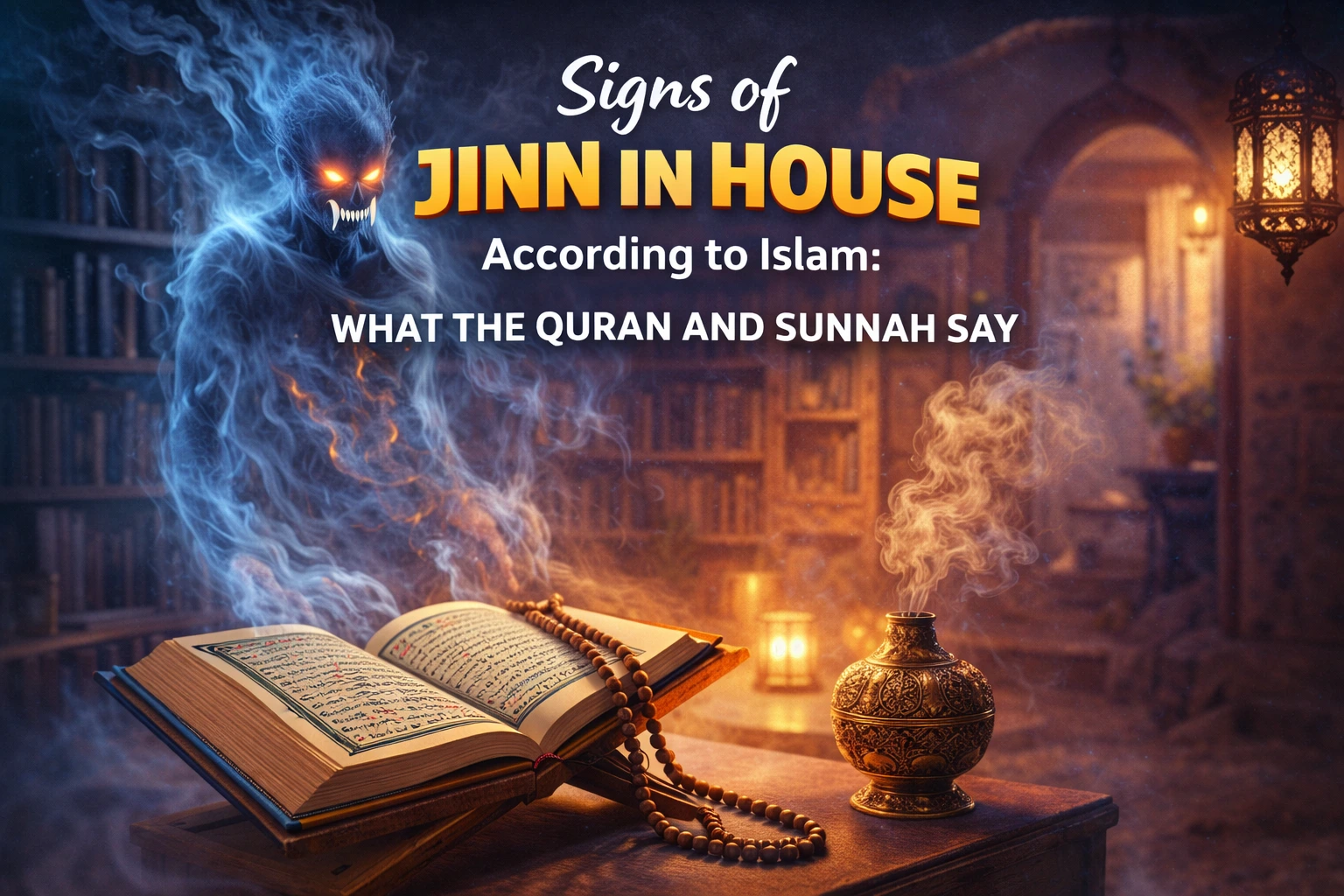
Signs of jinn in house are a concern for many Muslims when unusual events occur at home. Belief in jinn is a key part of Islam, and Islam encourages us to approach this topic with knowledge and trust in Allah, not fear or superstition. The Quran and Sunnah explain who the jinn are, how they live, and how Muslims can protect themselves.
This article discusses the signs of jinn in a house in Islam, stressing the importance of seeking reliable knowledge and avoiding superstition. Before listing signs, it is helpful to understand what Islam teaches about jinn.
Jinn in Islam
In Islam, jinn are real beings created by Allah, like humans and angels. The Quran states Allah made jinn from smokeless fire:
(Surah Al-Hijr 15:27)
Jinn lives in a world humans cannot see. They eat, drink, marry, and die. Some are Muslims; others, called shayateen, are not. Like people, jinn have free will and will be judged by Allah.
Islam teaches that most jinn do not harm humans. However, rebellious jinn can instill fear, cause whispers, or create disturbances, especially in places where Allah is not remembered.
Jinn Meaning
“Jinn” comes from the Arabic root janna, meaning hidden or unseen. This is why jinn are usually invisible.
Allah says in the Quran:
“Indeed, he sees you, he and his tribe, from where you do not see them.”
(Surah Al-A‘raf 7:27)
This verse reminds Muslims that jinn exist, but we should not fear them. Allah’s protection is strongest.
Signs of Jinn in the House According to Islam
Islam does not specify a definitive list of signs that jinn are present in a house. However, scholars note certain experiences that may occur when malicious jinn are involved, especially in homes lacking remembrance of Allah.
1. Constant Fear Without Clear Reason
If people in a house experience sudden fear, uneasiness, or a heavy sensation for no discernible reason, it may signal a spiritual issue. The Prophet ﷺ taught that homes where Allah is remembered remain protected, while neglect can invite harm.
2. Unexplained Sounds or Movements
Sometimes, hearing footsteps, witnessing objects move, or encountering odd noises at night can be attributed to jinn. However, Islam teaches us to investigate natural causes first.
3. Disturbing Dreams and Nightmares
Having many bad dreams, sleep paralysis, or seeing scary figures can sometimes be linked to shayateen, as mentioned in the hadith. The Prophet ﷺ advised reciting Ayat-ul-Kursi and the three Quls before going to sleep.
4. Sudden Anger and Frequent Arguments
If constant fighting, anger, or hostility prevail in a house without a clear cause, scholars suggest shayateen may influence emotions. The Prophet ﷺ said, “Shayateen love to cause conflict.”
5. Aversion to Quran and Prayer
Scholars note a prominent sign is when individuals feel pronounced discomfort during Quran recitation, especially Surah Al-Baqarah. The Prophet ﷺ said:
“Do not turn your houses into graves. Indeed, Shaytan flees from a home where Surah Al-Baqarah is recited.”
(Sahih Muslim)
6. Shadows or Unclear Shapes
Spotting shadows or fleeting shapes from the corner of the eye can feel unnerving. Islam cautions us to be prudent. Not every shadow is a jinn, but these moments should prompt increased remembrance of Allah.
What Islam Says About Protection from Jinn
Islam urges believers to focus on prevention and protection, not fear.
1. Regular Prayer and Dhikr
A home where people perform Salah and frequently remember Allah is protected. Saying Bismillah before eating, entering, and sleeping repels shayateen.
2. Reciting the Quran in the House
Reciting Surah Al-Baqarah regularly provides strong protection against jinn and shayateen.
3. Morning and Evening Duas
The Prophet ﷺ instructed us to recite morning and evening adhkar for protection from all harm, visible or unseen.
4. Avoiding Sins Inside the Home
Music, indecent acts, lying, and neglecting prayer can attract shayateen. A home grounded in taqwa, or God-consciousness, inherently repels evil.
Important Islamic Reminder
Islam strongly warns against:
- Calling magicians or fake “spiritual healers.”
- Using amulets, charms, or shirk practices
- Living in constant fear of jinn
Real protection comes only from Allah, not from objects or other people.
Final Thoughts
Belief in jinn is part of Islam, but fear is not encouraged. Key takeaways are: trust in Allah’s protection, focus on prayer, read the Quran, cultivate good character, and avoid superstition. Remembering Allah in the home offers protection from unseen harm.
FAQs
1. Are jinn always harmful to humans?
No. Many jinn are peaceful; some are Muslims. Only disobedient jinn may cause harm.
2. Can Jinn live in every house?
Jinn can be found everywhere, but shayateen avoid homes where Allah is remembered.
3. Is fear alone a sign of a jinn?
Not always. Fear can come from stress, anxiety, or imagination. Islam urges balance.
4. Does reciting the Quran remove jinn?
Yes, especially Surah Al-Baqarah. The Prophet ﷺ said, ” Shayateen flee from it.
5. Should we panic if we suspect jinn?
No. Islam teaches us to remain calm, make dua, and trust Allah—not panic.
6. Is ruqyah allowed in Islam?
Yes, Islamic ruqyah with the Quran and authentic duas is allowed and encouraged.
7. Can jinn harm children?
Allah protects everyone who remembers Him. Parents can help by teaching their children simple duas.