
For every Muslim preparing to perform Umrah or Hajj, understanding Miqat points is essential. These designated boundaries are not just geographical markers; they represent a spiritual transition into a sacred state of worship. Crossing these points without proper preparation can affect the validity of your pilgrimage, making it crucial to learn their importance, rules, and practical application.
This complete guide will help you understand Miqat points clearly and simply, especially if you are a first-time pilgrim.
What Are Miqat Points?
Miqat points are specific locations set as boundaries for pilgrims performing Umrah or Hajj. When a pilgrim reaches one of these points, they must enter a sacred state known as Ihram before crossing.
These points were established to ensure that every pilgrim begins their spiritual journey with the proper intention and preparation. They apply to both international travelers and residents living outside the boundary areas.
In simple terms, Miqat points mark the beginning of your pilgrimage rituals.
The Spiritual Importance of Miqat Points
Miqat points are not just physical checkpoints; they carry deep spiritual meaning. Crossing them signifies leaving behind worldly concerns and entering a state of devotion, humility, and purity.
At this stage, pilgrims shift their focus entirely toward worship. It is a reminder that the journey is not about travel or sightseeing, but about spiritual transformation.
Preparing mentally and emotionally before reaching Miqat helps you fully embrace this sacred transition.
Major Miqat Points for Pilgrims
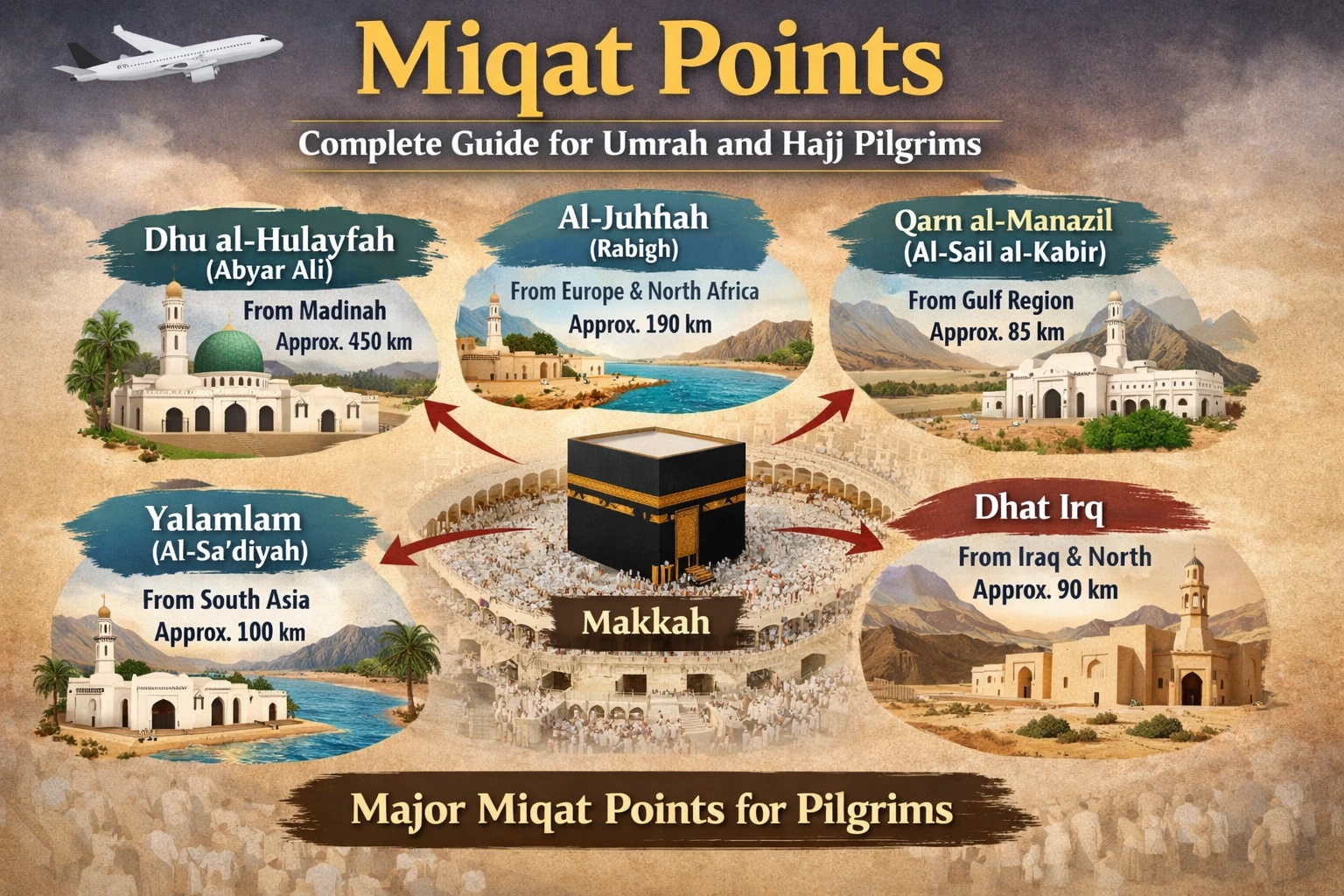
There are five main Miqat points assigned based on the direction from which pilgrims travel. Each has historical significance and a known distance from Makkah.
1. Dhu al-Hulayfah (also known as Abyar Ali)
This is the Miqat for pilgrims traveling from Madinah and is the farthest Miqat from Makkah.
- Distance from Makkah: Approximately 450 km
- Distance from Madinah: Around 9–12 km
- Old/Historical Name: Abyar Ali
It is one of the most commonly used Miqat points because many pilgrims visit Madinah before heading to Makkah. Due to the longer distance, pilgrims remain in the sacred state for a longer period compared to other Miqat points.
2. Al-Juhfah (near present-day Rabigh)
This Miqat is for pilgrims coming from Europe, North Africa, and western regions.
- Distance from Makkah: Approximately 180–190 km
- Old/Historical Name: Al-Juhfah
- Current Common Use: Rabigh (a nearby town where pilgrims now enter the state)
Al-Juhfah itself is now mostly abandoned, so pilgrims usually prepare at Rabigh, which lies close to the original Miqat boundary.
3. Qarn al-Manazil (also known as Al-Sail al-Kabir)
This Miqat is used by pilgrims traveling from the eastern regions, including the Gulf countries.
- Distance from Makkah: Approximately 75–95 km
- Old/Historical Name: Qarn al-Manazil
- Modern Name: Al-Sail al-Kabir
It is one of the closest Miqat points to Makkah, making it convenient for pilgrims traveling by road from the east.
4. Yalamlam (also known as Al-Sa’diyah)
This Miqat is designated for pilgrims coming from South Asia and some southern regions.
- Distance from Makkah: Approximately 90–100 km
- Old/Historical Name: Yalamlam
- Nearby Area Today: Al-Sa’diyah
Pilgrims traveling from countries like India, Pakistan, and Bangladesh often cross this Miqat, especially when arriving by air.
5. Dhat Irq
This Miqat is for pilgrims coming from Iraq and the nearby northern regions.
- Distance from Makkah: Approximately 85–100 km
- Old/Historical Name: Dhat Irq
It is less commonly used today than other Miqat points, but it remains an important boundary for those traveling from its designated direction.
Entering the Sacred State Before Crossing Miqat
Before reaching a Miqat point, pilgrims must prepare to enter the sacred state required for Umrah or Hajj. This includes:
- Wearing the prescribed simple clothing
- Making a clear intention for the pilgrimage
- Maintaining cleanliness and purity
- Avoiding prohibited actions after entering the sacred state
For those traveling by plane, airlines often announce when the aircraft is approaching a Miqat point. It is recommended to prepare in advance to avoid missing this important step.
What Happens If You Cross Miqat Without Preparation?
Crossing a Miqat point without entering the required sacred state is a common mistake, especially among first-time travelers.
If this happens, the pilgrim is generally required to return to the Miqat point and enter the state properly. If returning is not possible, a compensatory action may be required.
This is why preparation and awareness are so important. Knowing your route and timing ensures that you fulfill this obligation correctly.
Practical Tips for First-Time Pilgrims
If you are performing Umrah or Hajj for the first time, these tips can help make your journey smoother:
Plan Ahead
Research your travel route and identify your Miqat point in advance.
Prepare Early
If traveling by air, wear the required clothing or keep it easily accessible before boarding.
Stay Informed
Listen carefully to airline announcements regarding Miqat boundaries.
Travel Light
Keep your essentials organised to avoid stress during preparation.
Stay Calm
The journey can be overwhelming, but maintaining patience and focus is key.
These practical steps will help you approach Miqat with confidence and ease.
Miqat Points for Air Travelers
Modern travel has made it easier for pilgrims to reach the holy cities, but it also introduces new challenges.
When traveling by air, you may cross a Miqat point while still on the plane. In such cases:
- Enter the sacred state before reaching the boundary.
- Follow airline instructions or announcements.
- Seek guidance from experienced travelers if unsure.
Being proactive is essential, as missing the Miqat point mid-flight can be difficult to correct.
Differences Between Residents and International Pilgrims
Miqat rules can vary depending on the pilgrim’s place of origin.
- International Pilgrims: Must enter the sacred state at the designated Miqat point based on their route of travel.
- Residents within the boundary: May begin their intention from their place of residence.
Understanding your category ensures that you follow the correct procedure.
Common Mistakes to Avoid
Many pilgrims unintentionally make errors due to a lack of knowledge. Here are some common mistakes:
- Not knowing the correct Miqat point for your route.
- Delaying preparation until it is too late
- Ignoring airline announcements
- Entering the sacred state after crossing the boundary
- Lack of proper planning
Avoiding these mistakes will help you start your pilgrimage correctly.
Preparing for a Smooth Journey
A successful pilgrimage begins with proper preparation. In addition to learning about Miqat points, it is important to organise your travel, accommodation, and guidance in advance.
Many pilgrims look into trusted travel services and Umrah Deals to ensure their journey is comfortable and well-organised. This allows them to focus more on worship and less on logistical challenges.
Final Thoughts
Miqat points are a vital part of the Umrah and Hajj journey. They mark the beginning of a sacred experience and remind pilgrims to shift their focus from worldly matters to spiritual devotion.
By understanding their significance, preparing properly, and avoiding common mistakes, you can ensure that your journey starts on the right path.
Whether you are traveling for the first time or returning for another pilgrimage, respecting these boundaries will enhance your spiritual experience and bring you closer to the purpose of your journey.
FAQs
1. What are Miqat points?
Miqat points are designated boundaries where pilgrims must enter a state of ritual purity before performing Umrah or Hajj.
2. How many Miqat points are there?
There are five main Miqat points, each assigned based on the direction from which pilgrims travel.
3. Do I need to prepare before reaching Miqat?
Yes, you must prepare and enter the required state before crossing the Miqat boundary.
4. What happens if I miss the Miqat point?
You may need to return to the Miqat point or perform a compensatory action if returning is not possible.
5. How do I know when I am approaching Miqat during a flight?
Airlines usually announce when the aircraft is nearing a Miqat point.
6. Can I enter the sacred state at home before traveling?
Yes, especially if you are traveling by air, it is often recommended to prepare in advance.
7. Are Miqat rules different for residents?
Yes, residents within certain boundaries may begin their intention from their location.
8. Why are Miqat points important?
They ensure that every pilgrim begins their journey in a state of spiritual readiness and proper intention.