
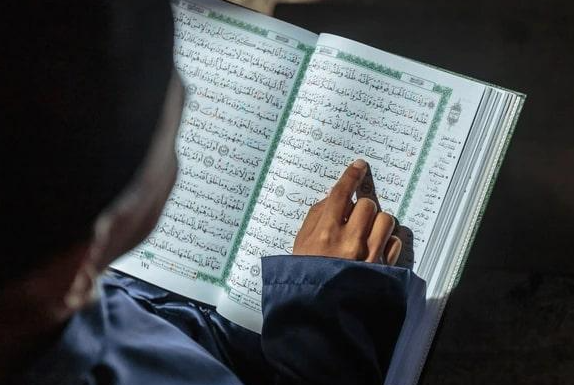
For anyone listening to a beautiful recitation of the Quran, the experience is immediately moving. The rhythmic flow, the precise lengthening of vowels, and the melodic nasalization have a soothing effect on the heart. This beautiful recitation is not random; it is governed by a precise science known as Tajweed.
The word Tajweed comes from the Arabic root j-w-d, meaning “to make good” or “to beautify.” In the context of the Quran, Tajweed refers to the rules governing how each letter should be pronounced, giving every letter its due right (haqq) and its deserved quality (mustahaqq).
While some may view Tajweed as a set of technical pronunciation rules reserved only for scholars, it is in fact a vital science and a spiritual practice that every Muslim should strive to learn. Here is why Tajweed matters, both scientifically and spiritually, and how it can transform your relationship with the Book of Allah.
1. Preserving the Word of Allah from Alteration
The Quran was revealed orally to the Prophet Muhammad (peace be upon him) via the Angel Jibreel. The Prophet (peace be upon him) then taught it to his companions exactly as he heard it. Learning Tajweed is our way of preserving that original oral tradition.
In Arabic, a tiny slip of the tongue can completely change the meaning of a word—sometimes turning a blessing into a curse.
- The Letters Ha (ح) and Kha (خ): In Surah Al-Fatiha, we say Al-Hamdu lillah (All praise is due to Allah). If the letters are slurred and pronounced with a Kha (Al-Khamdu), it completely changes the meaning to something inappropriate.
- Vowel Lengths: Lengthening a vowel where it shouldn’t be, or shortening a long vowel, can change a positive command into a negative one.
By learning Tajweed, we protect ourselves from making major errors (Lahn Jali) that alter the divine speech of Allah.
2. Elevating Your Focus in Prayer (Khushu)
Many of us struggle with distraction during our five daily prayers (Salah). When we recite Surahs quickly and mechanically, our minds easily wander to our daily tasks and worries. Tajweed requires slow, deliberate, and mindful pronunciation.
- Slowing Down (Tarteel): Allah commands in the Quran: “And recite the Quran with measured recitation [Tarteel].” (Surah Al-Muzzammil 73:4). Tajweed forces you to slow down, giving your mind the time it needs to absorb and reflect on the meanings of the words.
- Physiological Focus: The physical actions of Tajweed—focusing on the points of articulation in the throat, tongue, and lips—pull your consciousness into the present moment, increasing your presence and humility (Khushu) in prayer.
3. The Physiological Science: How Your Body Recites
Tajweed is a highly sophisticated phonetic science. It classifies Arabic letters based on:
- Makhraj (Point of Articulation): The exact place in the vocal tract where the sound is produced (throat, tongue, lips, nasal cavity, or empty space of the mouth).
- Sifat (Characteristics): How the air flows when producing the letter. Is it whispered (Hams) or spoken aloud (Jahr)? Is it soft (Rikhwah) or strong (Shiddah)?
When you study Tajweed, you train your vocal chords, tongue, and breathing patterns. It is an exercise of the body and mind that refines your speech, breath control, and focus.
4. Modern Tools to Help You Perfect Your Recitation
In the past, learning Tajweed required sitting in a classroom and repeating letters for hours. Today, modern technology makes it easier to practice at home and receive instant feedback.
- Audio Comparisons: Listen to high-quality reciters and record your own voice to compare.
- AI Recitation Checkers: You can utilize tools like the Online Tajweed Tester to record your recitation and receive immediate feedback on your pronunciation and rules. This helps identify which specific sounds or throat letters you need to work on.
5. Finding Structured Guidance
While self-study tools and apps are helpful, they are best used as supplements. Tajweed is an oral tradition that must be passed down from a teacher who can hear your mistakes and correct them. Investing in structured lessons with a certified teacher is the most reliable path to recitative mastery.
- For Beginners and Adults: It is never too late to learn. Dedicated programs like Learn Quran with Tajweed Online are designed to take adult students from basic alphabet recognition to fluent, beautiful recitation.
- Structured Classrooms: Working with teachers in structured online formats, such as Online Quran Classes for Adults, provides the necessary individual attention to refine your articulation and build recitation confidence.
Final Thoughts: Reciting with the Angels
The Prophet Muhammad (peace be upon him) said: “The one who recites the Quran skillfully will be in the company of the noble, obedient messengers (angels)…” (Sahih al-Bukhari).
Tajweed is not about rules and testing; it is an act of love. It is about honoring the Book of Allah by reciting it in the most beautiful, precise manner possible. When you take the time to learn the science of Tajweed, you are showing devotion to the words of Allah, opening the doors to a deeper, more profound relationship with your Creator.
About the Author
Quran In Depth is a comprehensive digital platform dedicated to making Quranic learning accessible, interactive, and engaging for modern Muslim families. Through smart tools like Tajweed testers, custom quizzes, and structured online classes led by Al-Azhar certified tutors, Quran In Depth helps students of all ages build a meaningful, daily relationship with the Book of Allah.