
Wudu (وضوء), also known as Islamic ablution, is a special purification performed before offering Salah (prayer). It is one of the essential conditions for the validity of prayer and symbolizes both physical cleanliness and spiritual purification.
Allah ﷻ has commanded believers to perform Wudu before Salah, ensuring that they stand before Him in a state of purity. Every practicing Muslim performs Wudu several times each day before the five daily prayers.
Whether you are a new Muslim, a beginner learning Islam, or simply want to refresh your knowledge, this complete guide will teach you how to perform Wudu correctly according to the Sunnah, step by step.
In this guide, you’ll learn:
- What Wudu is
- Why Wudu is important
- Virtues and rewards of Wudu
- Conditions of Wudu
- The obligatory (Farz) acts
- Sunnah acts before beginning
- Preparation before Wudu
- Common questions answered
What is Wudu?
Wudu is the Islamic act of washing specific parts of the body before performing acts of worship such as Salah.
It removes minor ritual impurity and prepares a believer to stand before Allah with cleanliness and humility.
The Arabic word “Wudu” (وضوء) literally means brightness, cleanliness, and purification.
It is one of the greatest acts of worship because every drop of water washes away sins while cleansing the body.
Why is Wudu Important?
Wudu is not simply washing the body.
It is an act of worship that reminds Muslims about:
- Purity
- Discipline
- Obedience to Allah
- Preparation for prayer
- Spiritual cleanliness
Without Wudu, Salah is generally not valid unless an exception in Islamic law applies (such as when Tayammum is performed under its prescribed conditions).
Evidence from the Qur’an
Allah says:
“O you who believe! When you rise to perform prayer, wash your faces and your hands up to the elbows, wipe your heads, and wash your feet up to the ankles.”
(Surah Al-Ma’idah 5:6)
This verse establishes the essential acts of Wudu that Muslims perform before prayer.
Virtues of Performing Wudu
The Prophet Muhammad ﷺ mentioned many rewards for performing Wudu properly.
1. Wudu Erases Sins
The Messenger of Allah ﷺ said that when a believer washes each limb during Wudu, the sins committed by that limb are washed away until they become free of sin.
This demonstrates that Wudu purifies both the body and the soul.
2. Wudu Leads to Paradise
The Prophet ﷺ informed the companions about the virtues of consistently maintaining Wudu and praying after it.
Remaining in a state of purity throughout the day is among the righteous habits encouraged in Islam.
3. Wudu Brings Light on the Day of Judgment
The Prophet ﷺ said that his followers will be recognized on the Day of Resurrection by the brightness of the parts washed during Wudu.
This is one of the greatest honors for the believers.
4. Angels Pray for Those Who Remain Pure
When a Muslim remains in Wudu while waiting for prayer, the angels ask Allah to forgive and have mercy on that person.
Benefits of Wudu
Besides spiritual rewards, Wudu also promotes cleanliness and hygiene.
Some benefits include:
- Keeps the body clean.
- Washes away dust and germs.
- Refreshes the skin.
- Improves concentration before prayer.
- Encourages good personal hygiene.
- Creates a sense of peace and calm.
- Strengthens the habit of cleanliness throughout the day.
When is Wudu Required?
A Muslim should perform Wudu before:
- Salah (obligatory and voluntary prayers)
- Touching the Mushaf (according to the majority of scholars)
- Tawaf around the Ka’bah
Many Muslims also like to perform Wudu before:
- Reading the Qur’an
- Sleeping
- Making Dhikr
- Visiting the mosque
Conditions Before Starting Wudu
Before making Wudu, ensure the following conditions are met.
1. Be a Muslim
Wudu is an act of worship prescribed for Muslims.
2. Have the Intention (Niyyah)
The intention is made in the heart for the sake of Allah.
There is no authentic requirement to verbally say the intention aloud.
Example intention:
“I intend to perform Wudu to seek Allah’s pleasure and prepare for Salah.”
3. Use Pure Water
The water should be clean and pure.
Examples include:
- Rain water
- River water
- Well water
- Tap water
- Spring water
4. Remove Anything Preventing Water from Reaching the Skin
Water must reach every required part of the body.
Examples include:
- Thick paint
- Nail polish
- Wax
- Heavy glue
Henna that stains the skin without forming a layer generally does not prevent water from reaching the skin.
5. Know That Prayer Time Has Begun (When Relevant)
For obligatory prayers, Wudu is performed in preparation for the prayer at its proper time.
The Four Farz (Obligatory) Acts of Wudu
According to the Qur’an, there are four essential acts of Wudu:
1. Washing the Face
The entire face must be washed once, ensuring water reaches all areas.
This includes:
- Forehead
- Nose area
- Chin
- Both cheeks
2. Washing Both Arms Including the Elbows
Wash:
- Right arm first
- Then left arm
Water should reach every part, including the elbows.
3. Wiping the Head (Masah)
Wet your hands and wipe over the head as prescribed.
This is called Masah.
4. Washing Both Feet Including the Ankles
Wash:
- Right foot
- Left foot
Ensure water reaches:
- Between the toes
- Around the heels
- The ankles
If any of these obligatory acts are deliberately omitted, the Wudu is not valid.
Sunnah Acts of Wudu
The Prophet ﷺ taught many Sunnah practices that perfect Wudu.
These include:
- Saying Bismillah before starting.
- Washing the hands before beginning.
- Using the Miswak.
- Rinsing the mouth.
- Cleaning the nose.
- Washing each limb three times.
- Beginning with the right side.
- Passing fingers through the beard (for those with thick beards).
- Passing fingers between the toes.
- Performing each step without long interruptions.
- Conserving water and avoiding waste.
Following these Sunnah practices increases the reward and reflects the example of the Prophet ﷺ.
The Dua Before Wudu
Before starting Wudu, say:
بِسْمِ اللهِ
Bismillah
Meaning:
“In the name of Allah.”
Preparing Yourself Before Wudu
Before beginning:
- Ensure your clothes are clean.
- Use clean water.
- Roll up your sleeves if needed.
- Remove anything that blocks water from reaching the skin.
- Face the Qiblah if convenient (optional, not required).
- Make your intention sincerely for Allah.
Mistakes People Make Before Wudu
Avoid these common mistakes:
- Forgetting the intention.
- Wasting large amounts of water.
- Wearing nail polish that blocks water.
- Leaving dry areas on the face or feet.
- Rushing through the washing.
- Not cleaning between the fingers and toes.
Step-by-Step Guide to Performing Wudu
Now that you understand the importance, conditions, and virtues of Wudu, it’s time to learn how to perform Wudu correctly according to the Sunnah of Prophet Muhammad ﷺ.
Follow each step carefully and perform the actions in the correct order.
Step 1: Make the Intention (Niyyah)
Image Suggestion: Person standing at the Wudu area before beginning.
Before starting Wudu, make the intention in your heart that you are performing Wudu for the sake of Allah in order to prepare for Salah or another act of worship.
There is no authentic supplication that must be recited aloud for the intention. Niyyah is an action of the heart.
Example intention:
“I intend to perform Wudu for the sake of Allah to purify myself for prayer.”
Step 2: Say “Bismillah”
Image Suggestion: Hands reaching toward the water tap.
Before washing any part of the body, say:
Arabic
بِسْمِ اللهِ
Transliteration
Bismillah
Meaning
In the name of Allah.
Beginning with the name of Allah reminds us that Wudu is an act of worship and should be performed sincerely.
Step 3: Wash Both Hands Three Times
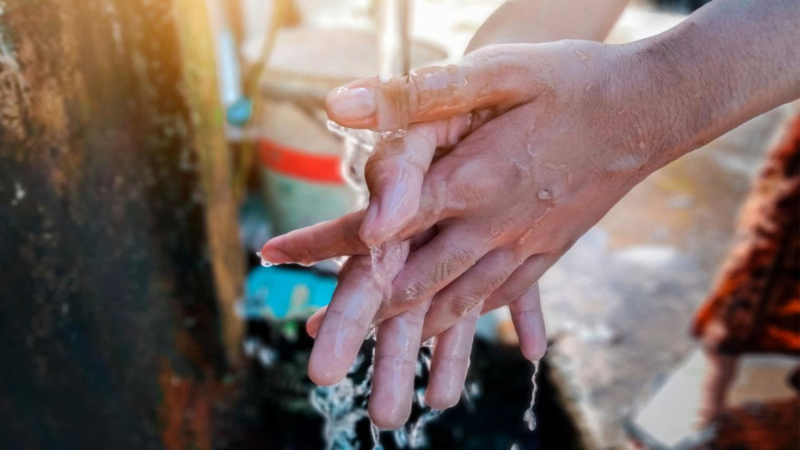
Wash your hands thoroughly from the fingertips up to the wrists.
Start with the right hand, then the left.
Repeat three times.
Make sure water reaches:
- Between the fingers
- Fingernails
- Wrists
- Palms
- Back of the hands
This removes dirt before washing the other parts of the body.
Step 4: Rinse the Mouth Three Times
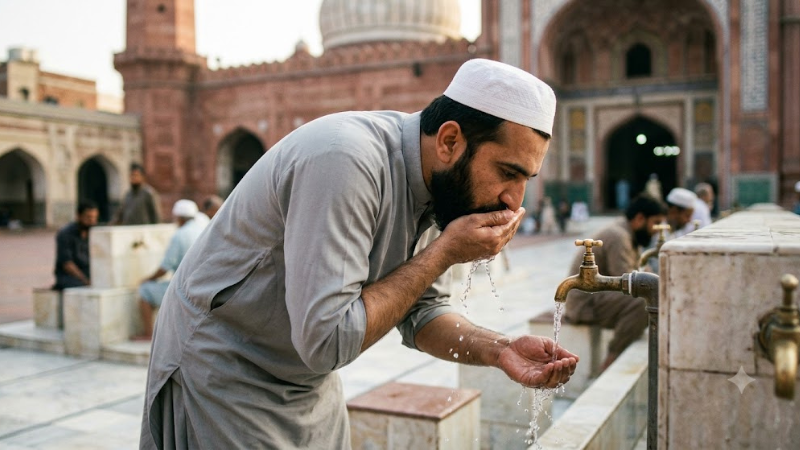
Take water into your right hand.
Rinse your mouth thoroughly and swirl the water around.
Repeat three times.
Try to clean:
- Teeth
- Gums
- Tongue
- Roof of the mouth
Using a Miswak before Wudu is a Sunnah of the Prophet ﷺ.
Step 5: Clean the Nose Three Times
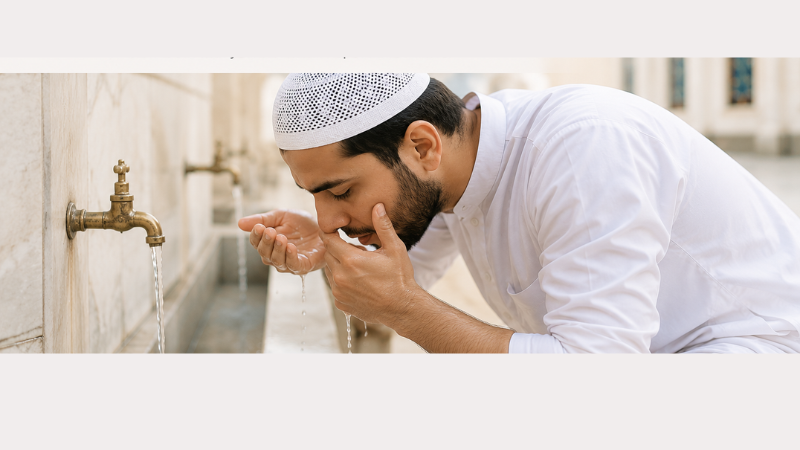
Take a small amount of water into your right hand.
Sniff the water gently into your nostrils.
Use your left hand to expel the water.
Repeat three times.
Avoid sniffing water too forcefully, especially while fasting.
Step 6: Wash the Entire Face Three Times
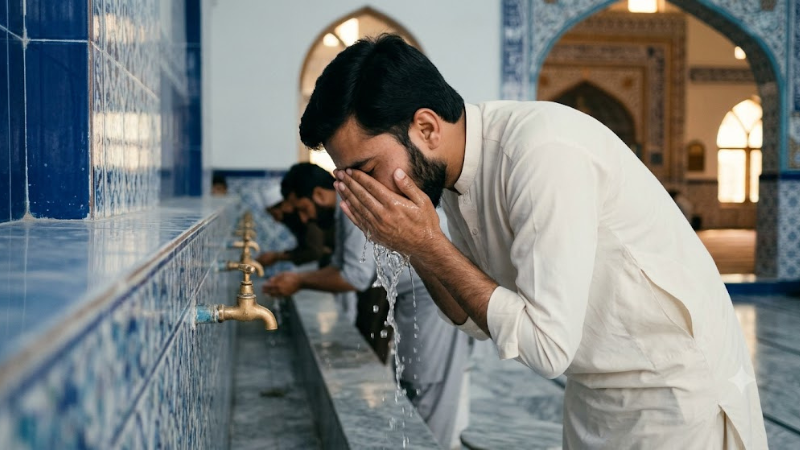
Wash your entire face.
The face extends:
- From the hairline to the chin
- From one ear to the other
Repeat three times.
For Men with Thick Beards
Run your wet fingers through the beard so water reaches the skin beneath as much as possible.
This practice is from the Sunnah.
Step 7: Wash the Right Arm Including the Elbow
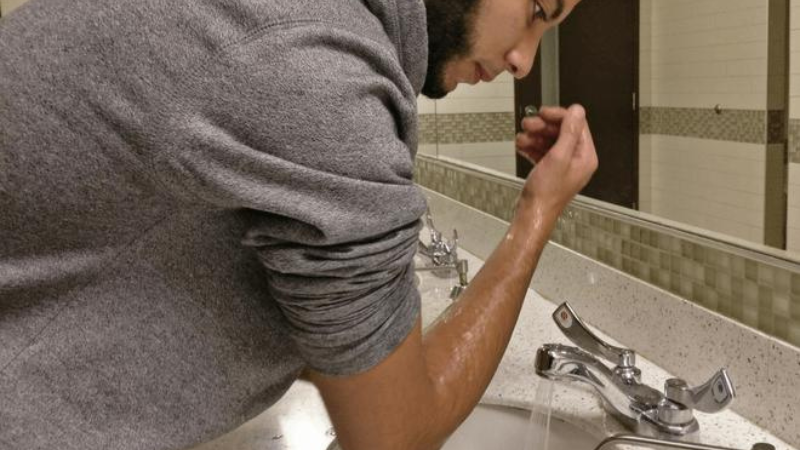
Wash the entire right arm.
Begin with the fingertips and continue up to and including the elbow.
Repeat three times.
Ensure water reaches:
- Fingernails
- Fingers
- Between the fingers
- Wrist
- Forearm
- Elbow
Step 8: Wash the Left Arm Including the Elbow
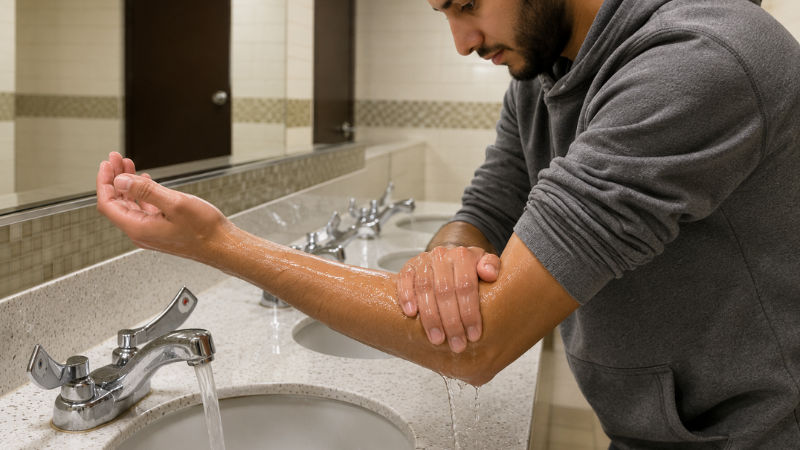
Repeat exactly the same process.
Wash the left arm thoroughly three times.
Do not leave any dry spots.
Step 9: Perform Masah (Wipe the Head Once)
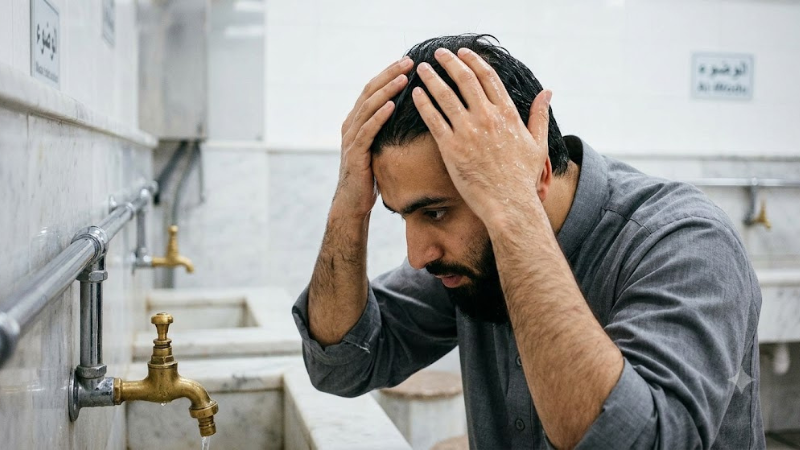
Wet your hands with fresh water.
Place both hands at the front of your head.
Move them toward the back of your head.
Then bring them back to the front.
This should be done once.
Unlike washing the limbs, the head is wiped, not washed.
Step 10: Wipe the Ears
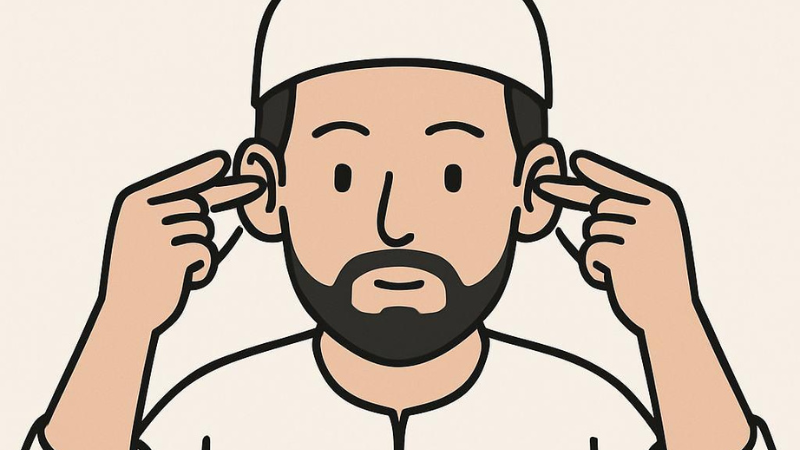
Using the same moisture remaining on your hands:
- Insert your index fingers gently into the ears.
- Wipe the inside of the ears.
- Use your thumbs to wipe behind the ears.
This is a Sunnah act.
Step 11–12: Wash Both Feet Three Times
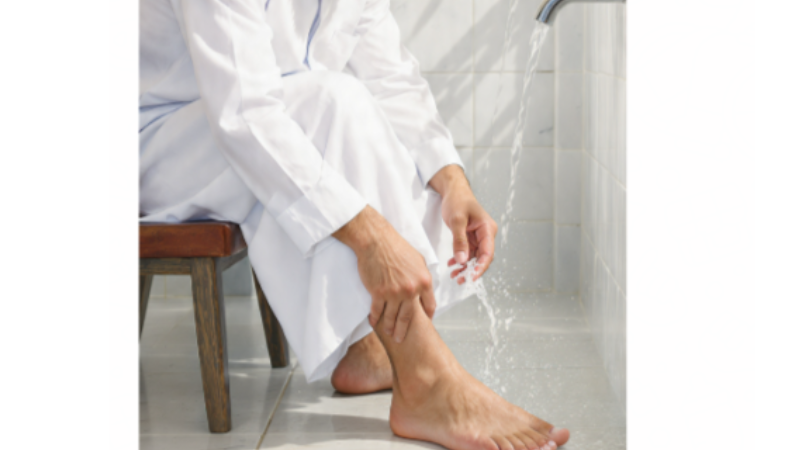
Wash your right foot first, then wash your left foot, making sure each foot is washed three times.
Ensure water reaches every part of both feet, including:
- Heel
- Sole
- Ankle
- Between the toes
- Around the sides of the feet
- Under the feet
When washing your feet, use your little finger to clean between the toes if possible, following the Sunnah.
Pay special attention to the heels and ankles, as these are commonly missed areas. Every part that is required to be washed should receive water.
Many people accidentally leave the heels dry, so take your time and ensure both feet are washed thoroughly before completing your Wudu.
The Dua After Completing Wudu
After finishing Wudu, face the Qiblah if convenient (this is not obligatory) and recite the following authentic supplication:
Arabic
أَشْهَدُ أَنْ لَا إِلٰهَ إِلَّا اللّٰهُ وَحْدَهُ لَا شَرِيكَ لَهُ، وَأَشْهَدُ أَنَّ مُحَمَّدًا عَبْدُهُ وَرَسُولُهُ
Transliteration
Ashhadu an la ilaha illallahu wahdahu la sharika lah, wa ashhadu anna Muhammadan ‘abduhu wa rasuluh.
Meaning
I bear witness that there is no deity worthy of worship except Allah alone, with no partner, and I bear witness that Muhammad is His servant and Messenger.
It is also authentically reported that one may add:
Arabic
اللَّهُمَّ اجْعَلْنِي مِنَ التَّوَّابِينَ وَاجْعَلْنِي مِنَ الْمُتَطَهِّرِينَ
Transliteration
Allahumma aj’alni minat-tawwabin waj’alni minal-mutatahhirin.
Meaning
O Allah, make me among those who constantly repent and make me among those who purify themselves.
Can You Dry Yourself After Wudu?
Yes. Drying yourself with a clean towel after Wudu is permissible. There is no requirement to remain wet after completing Wudu.
Tips for Performing Wudu Correctly
- Perform each step calmly without rushing.
- Ensure water reaches every required part.
- Wash each limb up to three times as taught in the Sunnah.
- Begin with the right side where applicable.
- Avoid wasting water, even if plenty is available.
- Check that no barrier (such as paint or nail polish) prevents water from reaching the skin.
Common Mistakes During Wudu
Avoid these common errors:
- Leaving parts of the face or elbows dry.
- Not washing between the fingers and toes.
- Washing fewer than the required obligatory areas.
- Wasting excessive amounts of water.
- Performing the steps out of order.
- Rushing so quickly that water does not cover the entire limb.
Summary of the Steps
Step Action 1 Make Niyyah (Intention) 2 Say Bismillah 3 Wash both hands (3 times) 4 Rinse the mouth (3 times) 5 Clean the nose (3 times) 6 Wash the face (3 times) 7 Wash the right arm including the elbow (3 times) 8 Wash the left arm including the elbow (3 times) 9 Wipe the head (Masah once) 10 Wipe the ears 11 Wash the right foot including the ankle (3 times) 12 Wash the left foot including the ankle (3 times) 13 Recite the Dua after Wudu What Breaks Wudu?
A person remains in a state of Wudu until something occurs that invalidates it. When Wudu is broken, it must be renewed before performing Salah or other acts of worship that require ritual purity.
Below are the most common things that invalidate Wudu according to the majority of Islamic scholars. Some details may vary among the four Sunni schools of jurisprudence (Hanafi, Maliki, Shafi’i, and Hanbali).
1. Anything That Comes Out from the Private Parts
Wudu is broken if anything exits from the front or back private parts, including:
- Urine
- Stool
- Passing wind (gas)
- Madhi (pre-seminal fluid)
- Wadi
- Semen (this also requires Ghusl, not just Wudu)
After relieving yourself, clean the area properly (Istinja) before making a new Wudu.
2. Deep Sleep
If a person falls into a deep sleep in which they lose awareness and control, the Wudu is invalidated.
A light nap where awareness remains may not invalidate Wudu according to some scholars, but opinions differ.
3. Loss of Consciousness
Wudu is broken by:
- Fainting
- Becoming unconscious
- Intoxication
- Any condition where awareness is lost
4. Menstruation and Postnatal Bleeding
For women:
- Menstruation (Hayd)
- Postnatal bleeding (Nifas)
These require Ghusl (full ritual bath) before prayer can resume.
Does Bleeding Break Wudu?
Scholars have differed on this issue.
For example, the Hanafi school generally considers flowing blood that exits the body to invalidate Wudu, while other Sunni schools often do not unless specific circumstances apply.
If you follow a particular madhhab or local scholar, follow their guidance.
Does Vomiting Break Wudu?
There is scholarly disagreement regarding vomiting.
The Hanafi school has one ruling, while other schools differ.
Consult a trusted scholar if this situation applies to you.
Does Touching Your Spouse Break Wudu?
The four Sunni schools have different opinions regarding physical contact between spouses and whether it invalidates Wudu.
Follow the opinion taught by your trusted scholars or local Islamic authority.
Does Laughing During Salah Break Wudu?
Some schools of Islamic jurisprudence distinguish between smiling, laughing, and loud laughter during prayer.
Because the rulings differ, it is best to consult the teachings of the madhhab you follow.
Things That Do NOT Break Wudu
Many people mistakenly think certain actions invalidate Wudu when they generally do not.
Examples include:
- Smiling
- Crying
- Normal sweating
- Cutting hair
- Cutting nails
- Changing clothes
- Applying perfume
- Reading the Qur’an from memory
- Eating halal food
- Walking barefoot
- Dust on the body
These actions do not normally require a new Wudu.
Can You Speak During Wudu?
Yes.
However, it is recommended to avoid unnecessary conversation and remain focused on worship while performing Wudu.
Can You Eat or Drink After Wudu?
Yes.
There is no prohibition against eating or drinking after completing Wudu.
Is It Necessary to Repeat Wudu Before Every Prayer?
If your Wudu remains valid and has not been broken, you may pray multiple prayers with the same Wudu.
Many Muslims, however, choose to renew their Wudu before each prayer because it is a virtuous practice.
Masah Over Khuff (Leather Socks)
Islam provides ease for travelers and others by allowing Masah (wiping) over qualifying leather socks (Khuffayn) under certain conditions.
The general conditions include:
- Wudu was completed before putting them on.
- The Khuff covers the required area.
- The permitted time limit has not expired.
The duration differs for residents and travelers according to authentic Sunnah.
Because the detailed rulings are extensive and vary depending on the type of footwear, consult a qualified scholar for practical application.
Wudu for Someone with a Continuous Excuse
Some people have ongoing conditions, such as:
- Continuous bleeding
- Urinary incontinence
- Continuous passing of wind due to illness
Islam provides concessions for these situations.
Such individuals should follow the rulings applicable to those with a valid excuse (Ma’dhur), as explained by knowledgeable scholars.
Common Mistakes While Performing Wudu
Many Muslims unintentionally make mistakes during Wudu.
Avoid the following:
1. Wasting Water
The Prophet ﷺ taught moderation even when water is abundant.
Use only the amount needed.
2. Leaving Dry Spots
Water must reach every obligatory part.
Commonly missed places include:
- Behind the ears
- Between the fingers
- Between the toes
- Elbows
- Heels
- Around the ankles
3. Rushing
Take your time.
Every required part should be washed properly.
4. Incorrect Order
Following the Qur’anic order is the Sunnah method.
Avoid changing the sequence without reason.
5. Forgetting Bismillah
Begin Wudu by saying:
بِسْمِ اللهِ
Bismillah
“In the name of Allah.”
6. Using Too Much Water
The Prophet ﷺ performed complete Wudu using a surprisingly small amount of water.
Islam encourages avoiding waste.
Tips to Improve Your Wudu
- Perform Wudu calmly.
- Learn every Sunnah.
- Begin with the right side.
- Keep your intention sincere.
- Remember Allah throughout the process.
- Avoid distractions.
- Check carefully for dry areas.
Frequently Asked Questions
Can I Pray Two Salah with One Wudu?
Yes.
As long as your Wudu has not been invalidated, you may pray multiple obligatory and voluntary prayers.
Can I Sleep After Wudu?
Yes.
Sleeping itself is not prohibited. However, deep sleep may invalidate Wudu according to the rulings discussed earlier.
Can I Read the Qur’an Without Wudu?
Many scholars recommend having Wudu when touching the Mushaf (physical copy of the Qur’an). The detailed rulings differ among scholars, so consult your local Islamic authority if needed.
Can I Perform Wudu in a Bathroom?
Yes.
It is permissible if the place is clean.
Can Children Learn Wudu?
Absolutely.
Teaching children Wudu from an early age helps them develop good habits and prepares them for Salah.
How Long Does Wudu Last?
There is no fixed time limit.
Wudu remains valid until something occurs that invalidates it.
Summary Table
Situation Is Wudu Required Again? Urinating  Yes
YesPassing stool YesPassing wind YesDeep sleep Yes (according to the majority)Fainting YesMenstruation ends Ghusl requiredSweating  No
NoCrying NoSmiling NoCutting nails NoHaircut NoChanging clothes NoConclusion
Wudu is much more than washing the hands, face, and feet—it is an act of worship that prepares a believer physically and spiritually to stand before Allah. By learning the correct method, following the Sunnah, and avoiding common mistakes, every Muslim can perform Wudu with confidence and mindfulness.
Remember that Islamic jurisprudence contains some differences of opinion on specific issues. Whenever you encounter a matter where scholars differ, seek guidance from a trusted local scholar or follow the teachings of the recognized madhhab you adhere to. Consistency, sincerity, and a desire to worship Allah correctly are the keys to performing Wudu in the best possible manner.