
Fasting during Ramadan is one of the five pillars of Islam and an important act of worship for Muslims. Every year, Muslims around the world observe fasts from dawn until sunset to strengthen their faith, develop patience, and seek the blessings of Allah.
Before starting a fast, many Muslims recite the Dua for Fasting to express their intention to worship Allah. Similarly, when the sun sets, they break their fast with gratitude and supplication. Learning the correct Arabic words, English translation, and meaning of these duas can help Muslims understand the purpose of fasting.
In this guide, we will cover the Dua for Sehri, Dua for Iftar, their Arabic text, transliteration, English translation, and the importance of making dua during Ramadan.
What Is the Dua for Fasting?
The Dua for Fasting refers to the supplication or intention associated with observing a fast. Muslims commonly recite a particular Arabic phrase before beginning their fast and another supplication when breaking it.
Fasting is not simply about avoiding food and drinks. It is an act of worship that teaches patience, self-control, gratitude, and obedience to Allah.
It is also important to understand that making the intention (Niyyah) in the heart is sufficient for fasting. Reciting a specific Arabic formula is not compulsory.
1. Dua for Sehri (Intention Before Fasting)
Sehri is the pre-dawn meal that Muslims eat before beginning their daily fast. It is an important part of Ramadan and a blessed time to prepare for fasting.
Many Muslims recite the following Dua for Sehri before Fajr as an expression of their intention to fast.
Arabic:
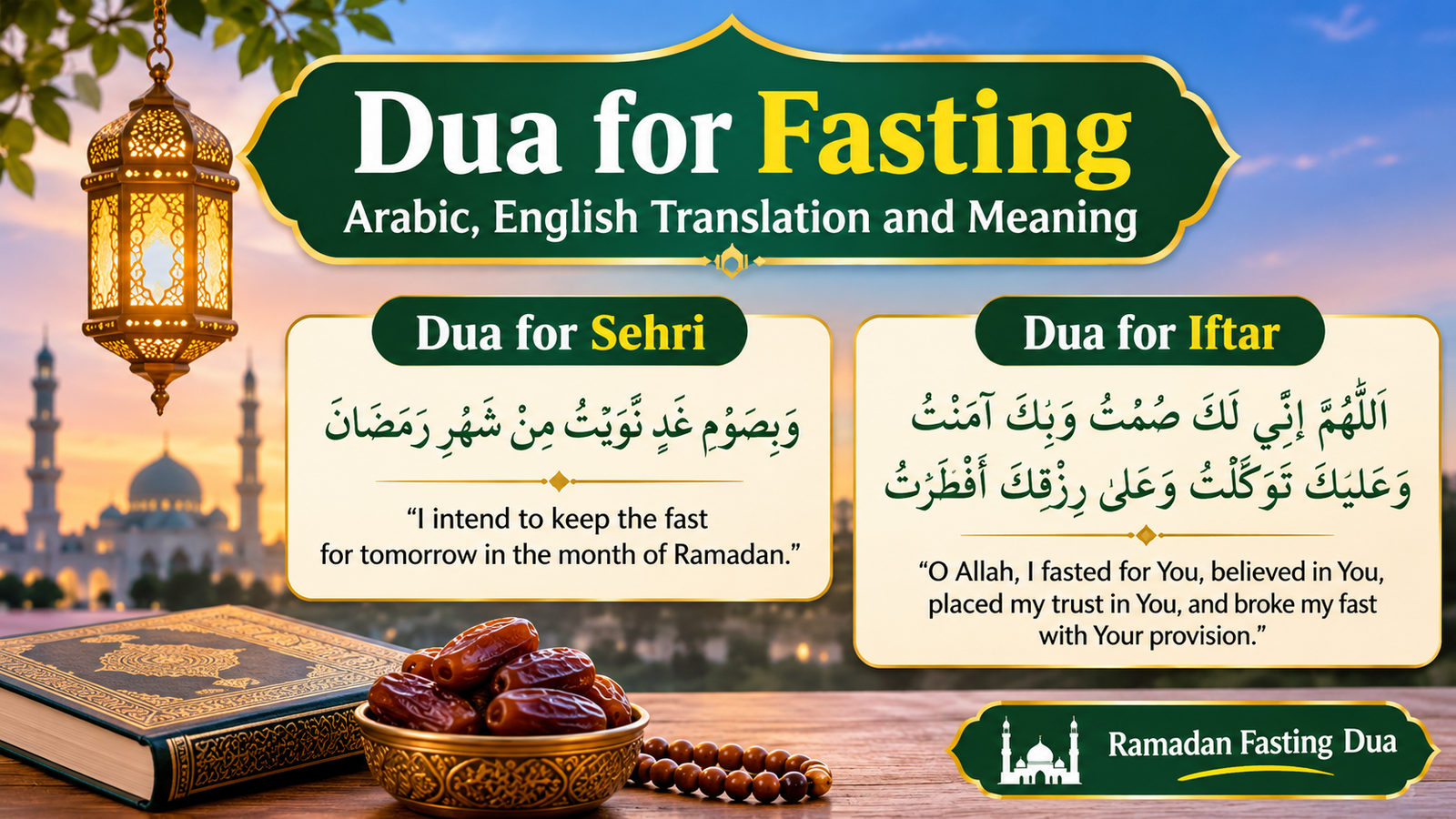
وَبِصَوْمِ غَدٍ نَّوَيْتُ مِنْ شَهْرِ رَمَضَانَ
Transliteration:
Wa bisawmi ghadin nawaitu min shahri Ramadan.
English Translation:
“I intend to keep the fast for tomorrow in the month of Ramadan.”
Meaning:
These words express a person’s intention to observe the fast on the following day of Ramadan for the sake of Allah. They remind Muslims that fasting is an act of worship performed to seek Allah’s pleasure.
Important Note: This is a commonly recited wording for the intention of fasting, but this exact Arabic formula is not established as a specific Sunnah from an authentic Hadith. A sincere intention in the heart is sufficient. Muslims do not have to pronounce these words aloud before fasting.
2. Dua for Iftar (Breaking the Fast)
Iftar is the meal Muslims enjoy at sunset after completing their daily fast. It is a special moment to thank Allah for providing the strength and ability to fast throughout the day.
The following Dua for Iftar is commonly recited by Muslims when breaking their fast.
Arabic:
اللَّهُمَّ إِنِّي لَكَ صُمْتُ وَبِكَ آمَنْتُ وَعَلَيْكَ تَوَكَّلْتُ وَعَلَىٰ رِزْقِكَ أَفْطَرْتُ
Transliteration:
Allahumma inni laka sumtu wa bika aamantu wa ‘alayka tawakkaltu wa ‘ala rizqika aftartu.
English Translation:
“O Allah, I fasted for You, believed in You, placed my trust in You, and broke my fast with Your provision.”
Meaning:
This supplication expresses faith, trust, and gratitude to Allah. It reminds Muslims that fasting is performed for His sake and that all blessings, including food and drink, come from Him.
Important Note: This is a widely circulated Iftar dua, but its narration is considered weak by hadith scholars. It should not be presented as an authentically established Sunnah with certainty.
3. Another Dua for Breaking the Fast
Another supplication reported in a Hadith is commonly recited after breaking the fast. It is narrated in Sunan Abu Dawood.
Arabic:
ذَهَبَ الظَّمَأُ وَابْتَلَّتِ الْعُرُوقُ وَثَبَتَ الْأَجْرُ إِنْ شَاءَ اللَّهُ
Transliteration:
Dhahabaz-zama’u wabtallatil-‘urooqu wa thabatal-ajru in sha Allah.
English Translation:
“Thirst has gone, the veins are moistened, and the reward is confirmed, if Allah wills.”
Meaning:
This dua expresses gratitude after completing a fast. It reminds Muslims that their thirst has ended and that they hope Allah will accept their fasting and reward their efforts.
Reference: Sunan Abu Dawood, Hadith 2357.
4. When Should You Recite the Ramadan Fasting Dua?
Knowing when to make dua during Ramadan helps Muslims develop a meaningful worship routine.
Here are some important times to remember:
Before Fajr: Make a sincere intention in your heart to observe the fast before dawn.
During Sehri: Eat your pre-dawn meal, remember Allah, and prepare yourself for the day of fasting.
Throughout the Day: Recite the Quran, perform Dhikr, and make personal supplications.
Before Iftar: Use the time before sunset to ask Allah for forgiveness, guidance, good health, and blessings.
After Breaking the Fast: Thank Allah for providing food and drink and remember the blessings of completing another day of fasting.
The time before Iftar is considered a special time for making dua. Therefore, try to use these moments to make sincere supplications for yourself, your family, and the Muslim community.
5. Benefits of Making Dua During Ramadan
Ramadan is a valuable opportunity to improve your relationship with Allah and develop good habits. Making dua regularly can help Muslims focus on their faith and remember Allah throughout the day.
Here are some benefits of making dua during Ramadan:
Strengthens Your Connection with Allah
Making dua helps you communicate your needs, hopes, and concerns to Allah. It reminds you that He is the source of guidance, mercy, and blessings.
Encourages Patience and Gratitude
Fasting teaches Muslims to remain patient during hunger and thirst. Making dua encourages gratitude for the blessings that Allah provides every day.
Provides an Opportunity to Seek Forgiveness
Ramadan is an excellent time to ask Allah for forgiveness and make sincere efforts to improve your actions and character.
Develops a Regular Worship Routine
Reciting duas, reading the Quran, and performing Dhikr can help Muslims develop consistent worship habits that continue beyond Ramadan.
6. Tips for Making Your Ramadan Fasting More Meaningful
Fasting is not only about staying away from food and drinks. It is also about improving your behaviour, controlling your desires, and becoming a better Muslim.
Here are some simple ways to make your Ramadan more meaningful:
- Make a sincere intention: Remember that fasting is an act of worship performed for the sake of Allah.
- Read the Holy Quran: Set aside some time every day to read and understand the Quran.
- Perform regular Dhikr: Remember Allah by reciting SubhanAllah, Alhamdulillah, and Allahu Akbar.
- Avoid negative behaviour: Stay away from lying, gossiping, arguments, and hurting other people.
- Make dua regularly: Ask Allah for forgiveness, guidance, protection, and blessings for yourself and your loved ones.
- Give charity: Help people in need and share your blessings with others whenever possible.
Conclusion
The Dua for Fasting is an important topic for Muslims who want to observe Ramadan with understanding and sincerity. Learning the Dua for Sehri and Dua for Iftar helps Muslims become familiar with the commonly recited supplications associated with fasting.
Remember that the intention to fast is made in the heart, and reciting a particular Arabic formula is not compulsory. You can also make personal duas in your own language and ask Allah for forgiveness, guidance, and blessings.
Use Ramadan as an opportunity to strengthen your faith, improve your character, and develop a closer connection with Allah.
May Allah accept our fasting, duas, prayers, and good deeds. Ameen.
Frequently Asked Questions (FAQs)
1. What is the Dua for Fasting in Arabic?
A commonly recited intention for fasting is:
وَبِصَوْمِ غَدٍ نَّوَيْتُ مِنْ شَهْرِ رَمَضَانَ
It is transliterated as “Wa bisawmi ghadin nawaitu min shahri Ramadan.”
It means, “I intend to keep the fast for tomorrow in the month of Ramadan.” However, saying these exact words is not compulsory.
2. What is the Dua for Sehri?
The commonly recited Dua for Sehri is:
وَبِصَوْمِ غَدٍ نَّوَيْتُ مِنْ شَهْرِ رَمَضَانَ
It expresses the intention to fast during Ramadan. A sincere intention in the heart is sufficient, and this specific wording is not established as an authentic prophetic supplication.
3. What is the Dua for Iftar?
A commonly recited Dua for Iftar is:
اللَّهُمَّ إِنِّي لَكَ صُمْتُ وَبِكَ آمَنْتُ وَعَلَيْكَ تَوَكَّلْتُ وَعَلَىٰ رِزْقِكَ أَفْطَرْتُ
It means, “O Allah, I fasted for You, believed in You, placed my trust in You, and broke my fast with Your provision.”
Its narration is considered weak by hadith scholars.
4. Can I make dua in English while fasting?
Yes. You can make personal supplications in English, Urdu, Arabic, or any language you understand. Allah knows your intentions and what is in your heart.
5. When should I make the intention for fasting?
For Ramadan fasting, make your intention before dawn. The intention should be sincere and present in your heart. You do not have to pronounce a specific Arabic formula.
6. Which dua is reported for breaking the fast?
The supplication reported in Sunan Abu Dawood (2357) begins with:
ذَهَبَ الظَّمَأُ وَابْتَلَّتِ الْعُرُوقُ وَثَبَتَ الْأَجْرُ إِنْ شَاءَ اللَّهُ
It means, “Thirst has gone, the veins are moistened, and the reward is confirmed, if Allah wills.”