
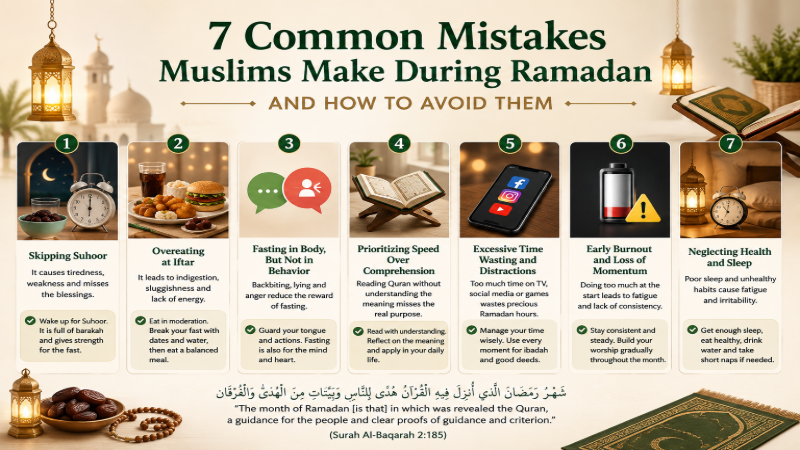
Ramadan is a sacred month of deep spiritual reflection, self-discipline, and devotion. Fasting from dawn to sunset is meant to elevate faith, foster empathy, and strengthen standard moral principles. However, many people inadvertently fall into habits that reduce the spiritual rewards of their fast, cause physical distress, or defeat the purpose of the month.
Below is a detailed guide highlighting the most common mistakes made during Ramadan and actionable ways to avoid them.
1. Skipping Suhoor (The Pre-Dawn Meal)
- The Mistake: Staying up late, eating a heavy meal at midnight, and sleeping straight through until the morning call to prayer without waking up for Suhoor.
- The Impact: Suhoor is not merely a practical meal; it carries significant spiritual blessings (barakah). Skipping it causes severe dehydration, severe blood sugar drops, low energy, and poor concentration throughout the workday.
- How to Avoid:
- Adjust your sleep schedule so you can comfortably wake up 30 to 45 minutes before Fajr.
- Focus on complex, slow-digesting carbohydrates (like whole grains and oats) paired with protein (eggs, yogurt, or nuts) and hydrating foods (like cucumbers and water).
- Avoid heavy, salty, or sugary foods at Suhoor, as they cause intense thirst during the day.
2. Overeating and Overindulging at Iftar
- The Mistake: Treating the time to break the fast as an unrestrained feast, quickly consuming massive portions of fried appetizers, sugary drinks, and heavy entrees immediately after sunset.
- The Impact: Overeating after a day of fasting causes rapid spikes in blood sugar, extreme indigestion, sluggishness, and fatigue. This often makes attending night prayers (Tarawih) or engaging in worship uncomfortable or impossible.
- How to Avoid:
- Break your fast according to the Sunnah: consume 1 to 3 dates alongside a glass of water.
- Pause after dates and water to perform the Maghrib prayer. This brief pause gives your brain time to process food signals and prevents overeating.
- Eat a balanced, portion-controlled dinner consisting of lean proteins, vegetables, and whole grains. Limit deep-fried foods and sugary beverages to occasional treats rather than daily staples.
3. Fasting in Body, But Not in Behavior
- The Mistake: Abstaining strictly from food and drink while continuing negative social behaviors like backbiting, gossiping, lying, arguing, or losing one’s temper.
- The Impact: Fasting is meant to cultivate piety (taqwa) and self-control. Harboring bad character or engaging in dishonest acts invalidates the spiritual essence of the fast, reducing it to mere physical starvation.
- How to Avoid:
- Treat Ramadan as a mandatory filter for your words and actions.
- When faced with anger, provocation, or idle gossip, remind yourself internally or verbally: “I am fasting.”
- Practice intentional silence, avoid toxic digital or physical environments, and actively engage in kind, patient interactions with family and colleagues.
4. Prioritizing Quran Speed Over Comprehension
- The Mistake: Rushing through the recitation of the Quran solely to complete the entire text multiple times, without paying attention to the meaning, lessons, or proper pronunciation.
- The Impact: While reciting the Quran carries great reward, the primary goal of the Book is reflection (tadabbur) and implementation in daily life. Reading quickly without comprehension misses the transformative power of the guidance.
- How to Avoid:
- Balance your speed with understanding. Set a realistic daily reading target that allows you to read steadily without rushing.
- Spend time daily reading the translation and a reliable commentary (tafseer) of the verses you recite.
- Pick 1 or 2 key verses each day to actively apply in your character or routines.
5. Excessive Time Wasting and Distractions
- The Mistake: Spending long hours watching television shows, browsing social media, playing games, or sleeping through the majority of the day to make time pass faster.
- The Impact: Ramadan arrives only once a year, and its days pass rapidly. Wasting hours in mindless entertainment squanders irreplaceable opportunities for forgiveness, supplication (dua), and personal growth.
- How to Avoid:
- Set explicit daily limits on social media and TV usage during the month.
- Create a realistic daily timetable that assigns specific slots for work, worship, family, rest, and Quranic study.
- Utilize small idle moments throughout the day (such as commute time or short breaks) for subtle remembrance (dhikr) or listening to beneficial lectures.
6. Early Burnout and Loss of Momentum
- The Mistake: Overexerting oneself during the first few days of Ramadan by trying to pray continuously, fast, and read vast portions of text, leading to exhaustion by mid-month.
- The Impact: Pushing too hard too fast leads to spiritual fatigue around the middle of the month. As a result, many people lack energy during the final ten nights, which are the most valuable nights of the year and contain Laylat al-Qadr (The Night of Decree).
- How to Avoid:
- Adopt a sustainable, steady pace. Focus on consistency over sheer quantity from day one.
- Gradually increase your worship efforts as the month progresses, building your energy toward the last ten nights.
- Prioritize quality and focus (khushu’) in obligatory prayers before adding excessive voluntary prayers.
7. Neglecting Physical Health and Proper Sleep Hygiene
- The Mistake: Staying up all night until Fajr, sleeping for brief windows during the day, and ignoring basic nutritional or hydration needs.
- The Impact: Severe sleep deprivation combined with poor nutrition leads to chronic exhaustion, weakened immunity, headaches, and irritability. This impairs both work productivity and worship quality.
- How to Avoid:
- Establish a consistent sleep schedule. Go to sleep shortly after Tarawih prayers and wake up refreshed for Suhoor, taking a brief 20–30 minute nap during the afternoon if needed.
- Drink plenty of water continuously between Iftar and Suhoor to maintain hydration.
- Avoid heavy caffeine consumption late at night to ensure restorative sleep.