
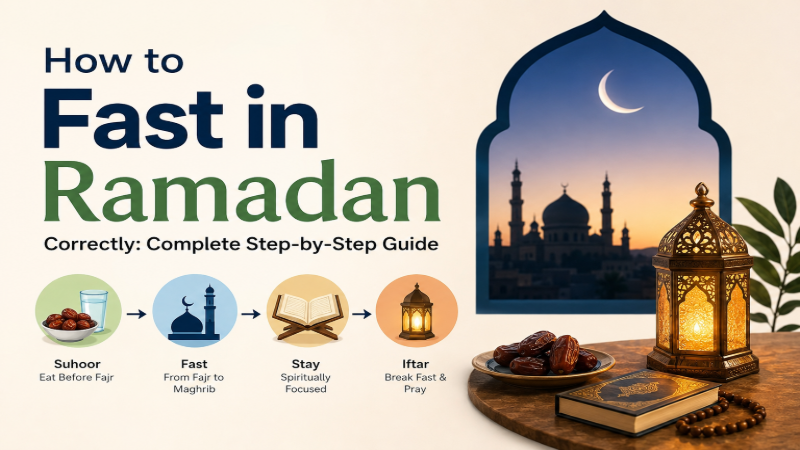
Fasting during Ramadan (Sawm) is one of the Five Pillars of Islam. It is a sacred act of worship that requires physical abstinence, spiritual discipline, and proper intention. To ensure your fast is valid, fulfilling, and rewarding, follow this comprehensive step-by-step guide.
1. Prerequisites and Intentions
Who Must Fast?
Fasting is obligatory for every Muslim who is:
Adult (reached puberty)
Sane and mentally capable
Physically able (healthy)
Not traveling long distances (travelers can make up days later)
Free from post-childbirth bleeding or menstruation (women make up these days later)
Making the Intention (Niyyah)
Intention is essential for the fast to be accepted.
When: Make the intention in your heart before dawn (Fajr) each day, or for the entire month at the beginning of Ramadan (according to the Maliki school).
How: Intention does not need to be spoken aloud; a clear resolve in your heart to fast for the sake of Allah is sufficient.
2. Daily Steps of the Fast
  [ Pre-Dawn ]  -->  Suhoor (Pre-Dawn Meal)
       │
       ▼
  [ Fajr Adhan ] --> Stop Eating/Drinking & Begin Fast
       │
       ▼
  [ Daytime ]   --> Abstain from Desires & Negative Actions
       │
       ▼
  [ Maghrib ]   --> Break Fast Immediately (Iftar) & Pray
Step 1: Eat the Pre-Dawn Meal (Suhoor)
Eat a nutritious meal shortly before the Fajr prayer call (Adhan).
Suhoor is a Sunnah (recommended practice) filled with blessings.
Choose slow-digesting, high-fiber foods and drink plenty of water.
Stop eating and drinking as soon as the Fajr Adhan begins.
Step 2: Maintain Abstained Conduct During the Fast
From Fajr until sunset (Maghrib), you must refrain from:
Eating or drinking anything (including water and chewing gum).
Smoking or using tobacco products.
Marital intimate relations.
Intentional vomiting.
Step 3: Protect Your Mind and Tongue
Fasting is not just about avoiding food; it is a spiritual detox. Guard yourself against:
Lying, backbiting, and gossiping.
Swearing, arguing, or losing your temper.
Engaging in inappropriate or wasteful entertainment.
Step 4: Break the Fast Promptly (Iftar)
Break your fast immediately at the time of Maghrib (sunset).
Sunnah Method: Break the fast with an odd number of dates and water before performing the Maghrib prayer.
3. Recommended Sunnah Practices (Mustahabb)
Increase Quran Recitation: Aim to complete or read a significant portion of the Quran during the month.
Perform Taraweeh: Attend night prayers (Taraweeh) after the Isha prayer.
Give Charity (Sadaqah): Be generous with financial help, food distribution, and acts of kindness.
Engage in Supplication (Dua): The supplication of a fasting person before breaking the fast is especially accepted.
4. What Invalidate the Fast?
Actions That Nullify the Fast (Requiring a Make-up Day / Qada):
Eating or drinking intentionally.
Intentional vomiting.
Menstruation or post-childbirth bleeding starting before sunset.
Sexual relations during fasting hours (requires Kaffarah / heavy penalty).
Things That DO NOT Break the Fast:
Unintentional eating or drinking due to forgetfulness (stop as soon as you remember; your fast remains valid).
Swallowing saliva normally.
Taking a shower or swimming (as long as water is not swallowed).
Using eye drops, ear drops, or getting non-nutritional injections.
Brushing teeth carefully without swallowing toothpaste or water.
5. Healthy Tips for a Successful Ramadan
| Focus Area | Practical Tip |
| Hydration | Drink 8–10 glasses of water between Iftar and Suhoor. Avoid sugary drinks. |
| Nutrition | Focus on complex carbs (oats, whole wheat) at Suhoor and lean proteins at Iftar. |
| Pacing | Avoid overeating at Iftar to prevent sluggishness during Taraweeh prayers. |
| Rest | Adjust your sleep schedule to ensure adequate rest despite early mornings. |