
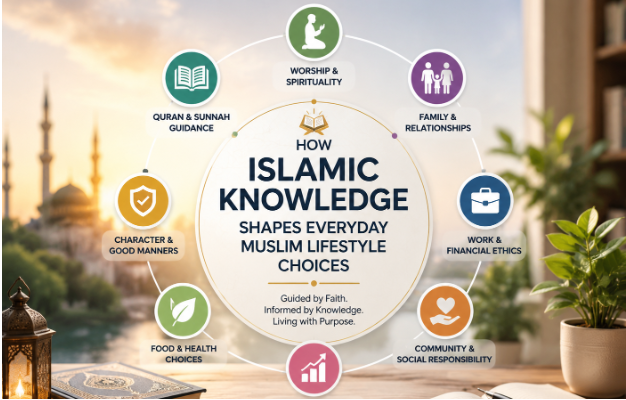
Islamic knowledge is not limited to books, classrooms, or religious discussions. For Muslims around the world, it is a practical guide that influences everyday decisions, personal habits, relationships, and the way they understand their purpose in life. From choosing what to eat and how to communicate with others to managing responsibilities and strengthening faith, Islamic knowledge provides a framework for living with awareness and balance.
A Muslim lifestyle is shaped by the teachings of the Qur’an, the Sunnah of Prophet Muhammad ﷺ, and the understanding developed by Islamic scholars throughout history. These sources help Muslims recognise the connection between worship and daily life. Simple actions such as showing kindness, maintaining cleanliness, earning honestly, and remembering Allah can become acts of worship when performed with the right intention.
Modern life brings many choices and challenges. Muslims often seek guidance on how to maintain their faith while managing work, family, education, technology, and social relationships. Islamic Dua knowledge provides principles that help individuals make thoughtful choices while staying connected to their spiritual values.
The Role of Islamic Knowledge in Daily Decision-Making
Every day, people make hundreds of choices. Some choices appear small, while others have long-term effects on personal character and society. Islamic knowledge encourages Muslims to approach decisions with consciousness of Allah and consideration of what is beneficial.
The concept of intention, known as niyyah, plays an important role in Islamic life. A Muslim learns that actions are not only judged by their outward appearance but also by the purpose behind them. A person working to support their family, studying to gain beneficial knowledge, or helping others can transform ordinary activities into meaningful acts when done sincerely.
This understanding changes the way Muslims view everyday responsibilities. Work, family duties, personal development, and community service are not separate from faith. Instead, they can become opportunities to practice Islamic values.
Islamic Knowledge and Personal Character Development
One of the strongest influences of Islamic knowledge is the development of good character. Islam places great importance on qualities such as honesty, patience, humility, generosity, and forgiveness.
A Muslim who learns Islamic teachings understands that character is an essential part of faith. Worship is not only about performing religious duties but also about improving how one treats others. The Prophet Muhammad ﷺ emphasised excellent manners and kindness as important aspects of a believer’s life.
For example, Islamic knowledge teaches Muslims to control anger, speak respectfully, avoid harming others, and fulfil promises. These principles influence interactions at home, in workplaces, and within communities.
The Influence of Islamic Knowledge on Worship Habits
Daily worship practices are among the clearest examples of how Islamic knowledge shapes lifestyle choices. Understanding the purpose behind acts of worship helps Muslims perform them with greater awareness and sincerity.
Salah, the five daily prayers, creates a structured connection between a Muslim and Allah throughout the day. Knowledge about prayer encourages Muslims to value punctuality, cleanliness, reflection, and discipline.
Similarly, learning about duas and remembrance of Allah helps Muslims develop a habit of seeking guidance, gratitude, and support in different situations. Many Muslims include supplications in their morning routines, before sleeping, during difficulties, and while making important decisions.
Resources such as authentic Islamic duas help Muslims learn meaningful supplications and understand their role in strengthening their relationship with Allah.
How Islamic Knowledge Guides Food and Lifestyle Choices
Islamic teachings influence many daily lifestyle decisions, including food choices. The concepts of halal and haram help Muslims identify what is permissible and what should be avoided.
Halal living is not only about avoiding prohibited items. It also encourages mindfulness about the source, preparation, and ethical nature of what a person consumes. Muslims are encouraged to choose pure and wholesome options while avoiding wastefulness.
This approach creates a lifestyle based on responsibility and gratitude. Food becomes more than physical nourishment; it becomes a reminder of Allah’s blessings and the importance of making conscious choices.
Family Values and Relationships Through Islamic Guidance
Family is one of the most important areas where Islamic knowledge shapes daily life. Islamic teachings emphasise respect between family members, kindness toward parents, care for children, and maintaining strong relationships.
Muslims learn that family responsibilities are a trust from Allah. This encourages patience, compassion, and cooperation within the home. Islamic knowledge provides guidance on resolving disagreements, showing appreciation, and creating an environment based on mercy.
The principles of Islamic family life also influence wider social relationships. Muslims are encouraged to support neighbours, help those in need, and contribute positively to society.