
In Islam, expressing gratitude is a beautiful way to show kindness and appreciation towards others. One of the most meaningful expressions Muslims use to thank someone is JazakAllah Khair. It is more than an ordinary thank-you because it includes a sincere prayer asking Allah to reward the person for their kindness.
Muslims commonly use this phrase when someone helps them, offers support, gives a gift, or does something good. But what is the exact JazakAllah Khair meaning in English and Urdu? How is it written in Arabic, and what should you say when someone uses this expression?
In this guide, we will explain its meaning, correct Arabic spelling, pronunciation, Islamic significance, and suitable replies.
What Is the JazakAllah Khair Meaning?
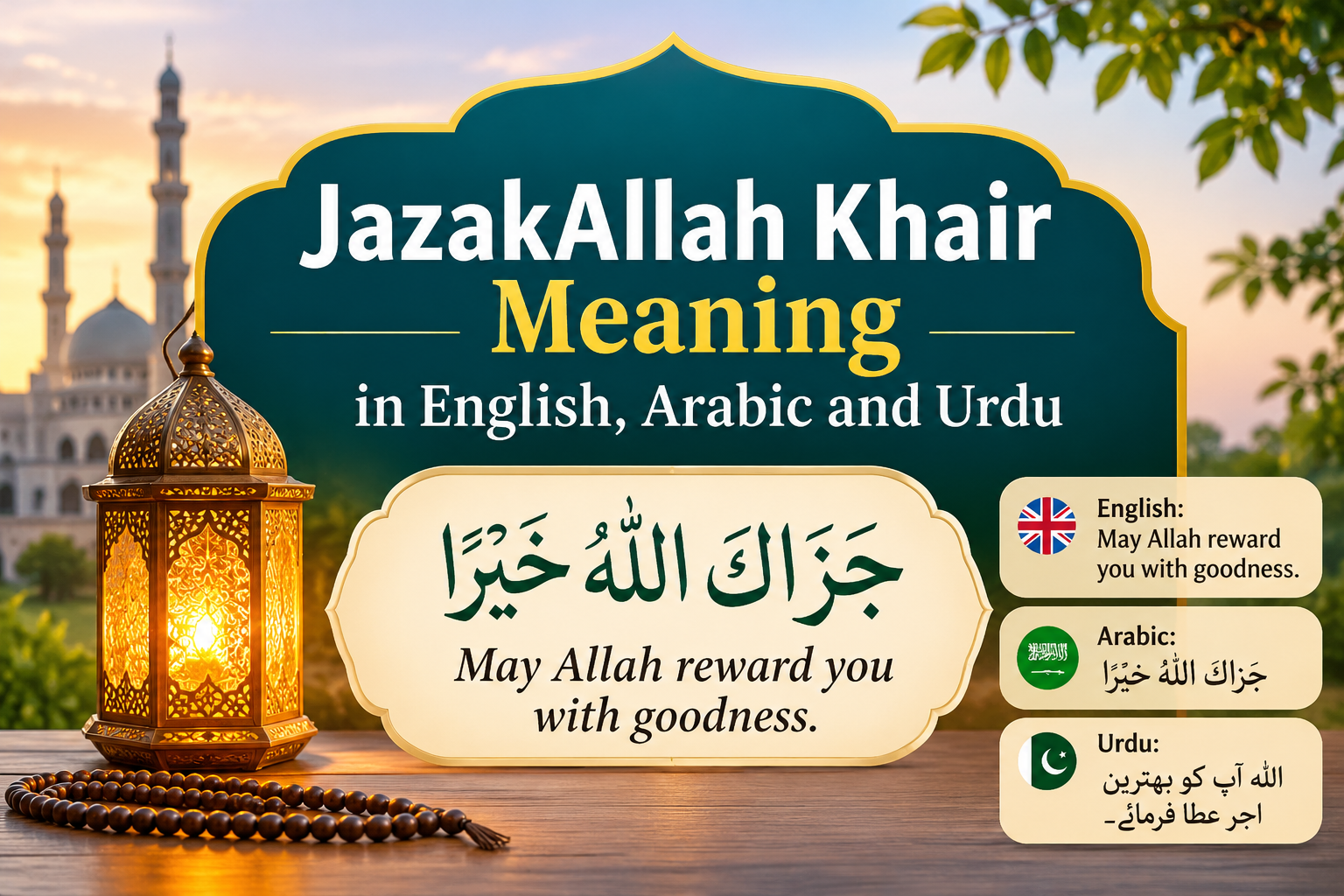
JazakAllah Khair (جَزَاكَ اللّٰهُ خَيْرًا) is an Arabic expression that means:
- English: May Allah reward you with goodness.
- Urdu: اللہ آپ کو بہترین بدلہ عطا فرمائے۔
- Roman Urdu: Allah aap ko behtareen ajar ata farmaye.
Muslims use this phrase to thank someone while making a beautiful dua for them. Instead of simply saying thank you, you are asking Allah to reward that person for their kindness and good deeds.
For example, if someone helps you with an important task, gives you useful advice, or supports you during a difficult time, you can say JazakAllah Khair to express your gratitude.
JazakAllah Khair in Arabic
The correct Arabic expression is:
جَزَاكَ اللّٰهُ خَيْرًا
Jazāk Allāhu Khayran
English Translation: May Allah reward you with goodness.
Urdu Translation: اللہ آپ کو بہترین اجر عطا فرمائے۔
The phrase consists of three main parts:
| Arabic word | Meaning in English |
| جَزَاكَ (Jazaka) | May He reward you |
| اللّٰهُ (Allahu) | Allah |
| خَيْرًا (Khayran) | With goodness |
Together, these words form a beautiful prayer asking Allah to grant someone a good reward.
JazakAllah Khair Meaning in English
The JazakAllah Khair meaning in English is “May Allah reward you with goodness.”
This expression carries a deeper meaning than a simple thank-you. When you say it to someone, you are not only appreciating their kindness but also praying that Allah rewards them for their good actions.
For example:
- When someone helps you, say JazakAllah Khair.
- When someone shares beneficial Islamic knowledge, you can thank them with this phrase.
- When someone gives you a thoughtful gift, use it to express your appreciation.
- When someone supports you during a difficult situation, say it as a sincere dua.
It is a meaningful way to combine gratitude with prayer.
JazakAllah Khair Meaning in Urdu
In Urdu, JazakAllah Khair means:
اللہ آپ کو اس کا بہترین اجر عطا فرمائے۔
Roman Urdu: Allah aap ko is neki ka behtareen ajar ata farmaye.
This phrase expresses gratitude and asks Allah to bless the person with a good reward for their kindness.
Urdu-speaking Muslims commonly use it in everyday conversations, Islamic messages, WhatsApp chats, and when thanking someone for their help.
What Is the Difference Between JazakAllah and JazakAllah Khair?
Both expressions are related, but they have slightly different meanings.
| Expression | Meaning |
| JazakAllah | May Allah reward you |
| JazakAllah Khair | May Allah reward you with goodness |
| JazakAllahu Khayran | May Allah reward you with goodness |
Adding Khair (goodness) makes the expression more complete by specifying the goodness being asked for in the reward.
What Is the Best JazakAllah Khair Reply?
When someone says JazakAllah Khair to you, you can respond with another beautiful Islamic expression.
Here are some commonly used replies:
1. Wa Iyyak (وَإِيَّاكَ)
Meaning: And you too.
You can use this response when someone thanks you with JazakAllah Khair.
2. Wa Iyyakum (وَإِيَّاكُمْ)
Meaning: And you too (plural or respectful form).
This expression is commonly used when responding to more than one person or addressing someone respectfully.
3. Wa Antum Fa Jazakumullahu Khairan (وَأَنْتُمْ فَجَزَاكُمُ اللّٰهُ خَيْرًا)
Meaning: And may Allah reward you with goodness too.
This is another way to return the prayer and express gratitude.
4. Ameen (آمِين)
Meaning: O Allah, accept this prayer.
You can also say Ameen to express your hope that Allah accepts the dua.
Quick Reply Guide
| Situation | Suitable reply |
| Someone thanks you personally | Wa Iyyak |
| Someone thanks a group | Wa Iyyakum |
| You want to return the dua | JazakAllahu Khayran |
| You want to agree with the dua | Ameen |
Is JazakAllah Khair Mentioned in Hadith?
Yes. The expression is supported by an authentic hadith.
Usama ibn Zayd (رضي الله عنه) reported that the Messenger of Allah ﷺ said:
“Whoever is treated kindly and says to the one who did it, ‘Jazak Allahu Khayran,’ has done enough to thank him.”
Reference: Jami’ at-Tirmidhi, Hadith 2035.
This hadith highlights the importance of appreciating people who do good for us. Saying JazakAllah Khair is a meaningful way to acknowledge their kindness and make dua for them.
When Should You Say JazakAllah Khair?
You can use this expression in many everyday situations. It is suitable whenever someone does something kind or beneficial for you.
Here are some examples:
- After receiving help: When someone helps you with your work or personal matters.
- After receiving a gift: To thank someone for their thoughtful gesture.
- After learning something useful: When someone teaches you something beneficial about Islam or daily life.
- After receiving support: When a friend or family member supports you during a difficult time.
- After someone makes dua for you: To appreciate their sincere prayer.
Using this phrase helps make everyday conversations more meaningful and encourages kindness between people.
Common Mistakes When Writing JazakAllah Khair
People often write this expression in different ways because Arabic words are transliterated into English letters. Some common variations include:
- JazakAllah Khair
- Jazak Allahu Khairan
- Jazakallah Khairan
- Jazāk Allāhu Khayran
The Arabic expression is جَزَاكَ اللّٰهُ خَيْرًا. The transliteration may vary, but the intended meaning remains the same.
One important point is that the ending can change according to Arabic grammar and how the phrase is pronounced. Therefore, learning the Arabic form is helpful.
Frequently Asked Questions (FAQs)
1. What does JazakAllah Khair mean in English?
JazakAllah Khair means “May Allah reward you with goodness.” Muslims use this phrase to thank someone and pray for their reward from Allah.
2. What is JazakAllah Khair in Arabic?
It is written as جَزَاكَ اللّٰهُ خَيْرًا. It is an Arabic expression used to show gratitude and make a dua for someone.
3. What is the best JazakAllah Khair reply?
A common reply is Wa Iyyak (وَإِيَّاكَ), which means “And you too.” You can also say Wa Iyyakum when addressing multiple people.
4. What does JazakAllah Khair mean in Urdu?
It means اللہ آپ کو بہترین اجر عطا فرمائے۔ It is a prayer asking Allah to reward someone with goodness.
5. Can I say JazakAllah Khair to a woman?
Yes. When addressing a woman in Arabic, the grammatically feminine form is Jazakillahu Khayran (جَزَاكِ اللّٰهُ خَيْرًا).
6. Is JazakAllah Khair better than saying thank you?
Both expressions show gratitude. JazakAllah Khair additionally includes a prayer asking Allah to reward the person for their kindness.
7. Can I say JazakAllah Khair to a non-Muslim?
The phrase is a prayer asking Allah to reward someone with goodness. Muslims may use it to express appreciation for kindness, while considering the context and their understanding of the dua.
Conclusion
JazakAllah Khair is a beautiful Islamic expression that combines gratitude with a sincere prayer. Its meaning, “May Allah reward you with goodness,” reminds Muslims to appreciate the kindness and support they receive from others.
Whether you say it in Arabic, English, or Urdu, the purpose remains the same: to thank someone and ask Allah to bless them with a good reward. Try to make this expression part of your daily conversations and spread kindness through meaningful words and duas.
May Allah reward everyone who does good for others and fill our lives with kindness, blessings, and goodness. Ameen.